Prefer to Listen? (11 Mins)
As Catholics, we are called to develop a vital and intentional prayer life so we may grow in our faith. While most of us are familiar with vocal prayers—those beautiful formulas taught by Our Lord or written by the saints—we are also encouraged to cultivate a deeper conversation with God in the solitude of our hearts. This is the art of Mental Prayer.
By understanding the essence of this silent prayer, we can unlock its power to open us to God’s presence, nourish our souls with grace, and establish a profound daily prayer routine that leads to holiness.
What is Mental Prayer?
Mental prayer, as taught by the Church, is interior prayer in the solitude of the soul in which the life of faith is considered and personal sentiments of the heart are expressed to God. It is not merely thinking about God; it is speaking with Him.
Adolphe Tanquerey, a renowned theologian, defines it as “a silent elevation and application of our mind and heart to God in order to offer Him our homages and promote His glory by our advancement in virtue.”
Saint Teresa of Avila offers perhaps the most beautiful definition:
“Mental Prayer is nothing else than an intimate friendship, a frequent heart-to-heart with Him by whom we know ourselves to be loved.”
The Roots of Interior Prayer
The practice of mental prayer has deep roots in Sacred Scripture. In the Old Testament, the Psalms repeatedly express the importance of meditating on God’s law to keep the soul pure. In the New Testament, Jesus taught the importance of silent prayer away from distractions: “But when you pray, go into your room and shut the door and pray to your Father who is in secret” (Matthew 6:6).
From the desert hermits like St. Anthony of Egypt to the great mystics like St. John of the Cross, the saints have consistently taught that this interior conversation is the furnace of charity and the surest path to sanctity. The Catechism affirms that mental prayer allows us to “penetrate the mystery” of God’s presence (CCC 2708).
The 4 Essential Steps of Mental Prayer
How do we actually practice this? While there are many methods, most can be distilled into four essential components. Following this structure will help you avoid distractions and ensure your prayer is fruitful.
- Preparation: Withdrawing from distraction and placing yourself in God’s presence.
- How to do it: Take a moment to silence your phone and your mind. Make an Act of Faith that God is present with you. Ask the Holy Spirit for light and invoke the Blessed Virgin Mary to help you pray.
- Meditation: Reflecting on a specific truth or scripture passage (Lectio).
- How to do it: Read a brief passage from the Gospels or a spiritual book. Think about what you read. Who is speaking? What does this mean for your life? This “intellectual” step is like gathering wood for the fire—it provides the material to move your heart.
- Affective Prayer: Moving the will to love God and produce “affections” (joy, sorrow, gratitude).
- How to do it: This is the core of mental prayer. Once the meditation moves you, place the emphasis on loving rather than thinking. Speak to God from your heart. You might express sorrow for past sins, gratitude for His sacrifice, or love for His goodness. This is the conversation with God in its purest form.
- Resolution: Deciding on one specific act of virtue to practice that day.
How to do it: Don’t end your prayer without a plan. Make a concrete, actionable resolution. For example, “I will not complain about traffic today,” or “I will be kind to that specific coworker who annoys me.” This ensures your prayer bears fruit in your daily life.

Choosing a Subject for Meditation
Beginners often struggle with what to think about. It is helpful to select a subject the night before.
- The Passion of Christ: St. Teresa of Avila taught that we should always return to the humanity of Christ. Picturing Him in the Garden of Gethsemane or carrying the Cross is a powerful way to stir the heart. Many find the practice of praying the Stations of the Cross to be a valuable framework for meditation on the Passion.
- The Gospels: Read the Mass readings for the day, or choose a Gospel and read a few verses each day, searching for the hidden depths of the passage rather than quickly reading entire chapters.
- The Four Last Things: Meditating on death, judgment, heaven, and hell can provide a powerful motivation to avoid sin (Sirach 7:36).
- Virtues of Mary: Consider her humility at the Annunciation or her heroic patience at the foot of the Cross.
Overcoming Distractions in Mental Prayer
Distractions are not a sign of failure; they are a normal part of the human experience. Many of us are unaccustomed to silence, and our minds are prone to wander toward daily tasks or worries. Furthermore, because mental prayer is so powerful for overcoming vice, the enemy of our souls will often try to frustrate our plans to engage in it.
We should anticipate these challenges and be prepared to meet them with peace. Here are four practical strategies to maintain your focus.
- Practice Gentle Refocusing: When you realize you have been distracted, do not become angry or discouraged. Frustration only disturbs your peace further. Instead, simply acknowledge the distraction, release it, and turn your attention back to God. St. Teresa of Avila advised her spiritual children to treat these wandering thoughts not with anxiety, but with a gentle determination to return to the subject of meditation as often as necessary.
- Lean on Prayer Aids: Do not feel you must pray entirely from memory or in a void of silence. Especially when you are tired or dry, utilize aids such as Sacred Scripture, a good spiritual book, or a crucifix. These resources provide structure for your mind. Even after many years of practicing the heights of mental prayer, St. Teresa of Avila would often bring a book with her into prayer to help her refocus if her mind began to wander.
- Accept Imperfection: Mental prayer is a relationship, not a performance. It does not need to be a flawless experience to be fruitful. God sees the desire of your heart to be with Him, and He honors your sincere effort—even if that effort consists mostly of fighting off distractions. Peacefully accept your limitations and trust that God’s grace is working in you, even in the struggle.
- Invoke Our Lady: The Blessed Virgin Mary lived a life of perfect mental prayer, “pondering all these things in her heart” (Luke 2:19). If you feel under spiritual attack or unable to focus, turn to her. She shares her virtues of silence and deep love with us and serves as a powerful protector against the enemy’s attempts to disturb our prayer.
Common Schools of Mental Prayer
While the steps above are universal, different saints emphasized different approaches to mental prayer. You are free to use any method that works for you.
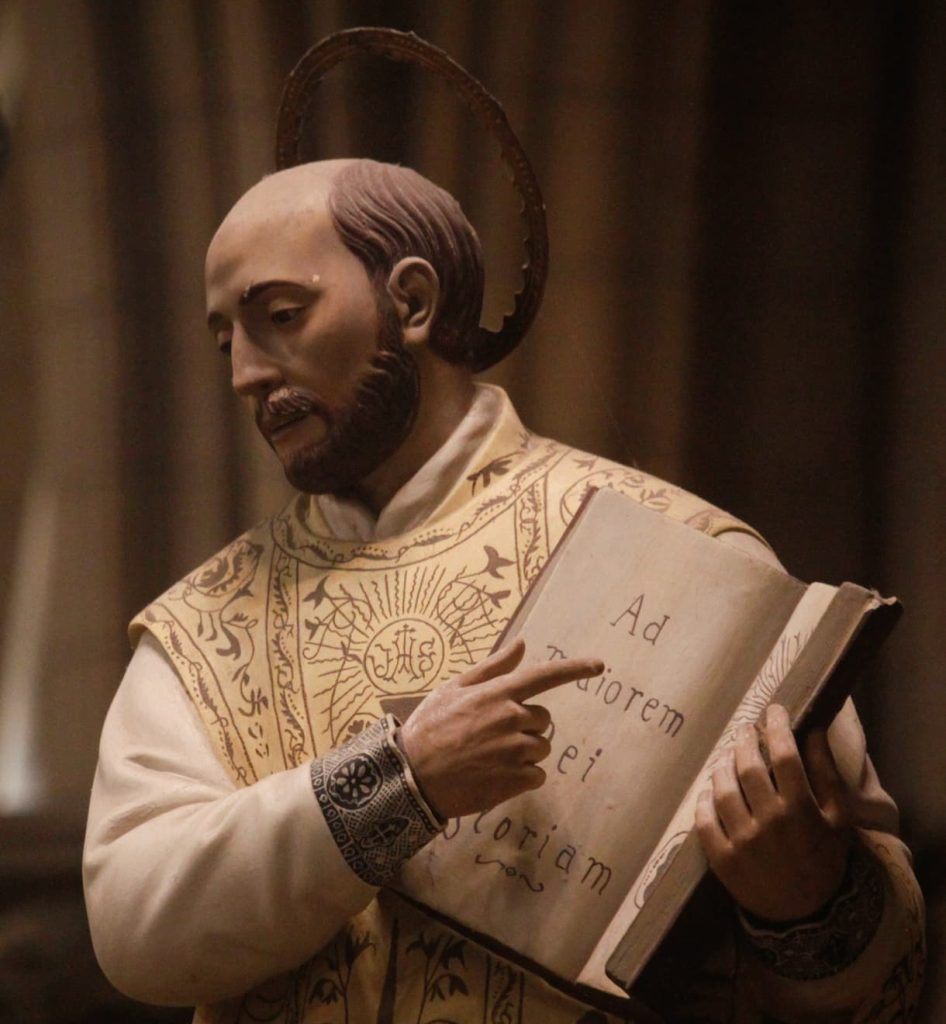
- Ignatian Prayer (The Imagination): St. Ignatius of Loyola encouraged using the imagination to “place yourself in the scene.” If meditating on the Nativity, imagine the smell of the hay, the cold air, and the face of the Baby Jesus. This active engagement helps capture the mind and move the will.
- Salesian Prayer (The Practical): St. Francis de Sales emphasized the “Preparation” and the “Resolution.” He taught that we must carry the “spiritual bouquet” of our prayer (a specific thought or feeling) with us throughout the day to keep us at peace and recollected.
- Teresian/Carmelite Prayer (The Relationship): St. Teresa emphasized “friendly conversation.” She focused less on the structure and more on the relationship, encouraging the soul to remain in a loving, silent gaze upon Christ.
- Lectio Divina (The Word): Lectio Divina is a monastic method of reading Scripture slowly (Lectio), thinking about it (Meditatio), praying about it (Oratio), and resting in God (Contemplatio).
Mental Prayer on the Go: The Spirit of Recollection
St. Alphonsus Liguori taught that the fruit of mental prayer is lost if we immediately plunge back into the world without God. We must cultivate a spirit of recollection.
This means maintaining a “background awareness” of God’s presence throughout your daily prayer routine and work. You can do this by using “Aspirations“—short, arrow-like prayers shot up to heaven during the day, such as:
- “Jesus, I trust in You.”
- “My God and my All.”
- “Lord, help me to be patient right now.”
Conclusion
Mental prayer is indispensable for the life of virtue and growth in holiness. St. Alphonsus Liguori went so far as to say, “All the saints became saints because of mental prayer.”
It requires no special equipment—only a willing heart and a few minutes of silence. By starting today, even for just 15 minutes, you begin a lifelong conversation with God that will transform your soul and prepare you for eternity.
Frequently Asked Questions About Mental Prayer
1. What is the difference between vocal prayer and mental prayer?
Vocal prayer uses set words and formulas (like the “Our Father,” or reading from a prayer book) to speak to God. Mental prayer, by contrast, is a silent, interior conversation with God. It does not require specific words; instead, it involves using your mind (intellect) to think about a truth of the faith, and your heart (will) to love God and make a resolution to grow in virtue. St. Teresa of Avila simply called it a “friendly intercourse… with Him who we know loves us.”
2. How long should I spend in mental prayer each day?
Most spiritual directors recommend starting with 15 minutes a day. This provides enough time to settle down, read a short reflection, and converse with God without feeling rushed. As you grow in the habit, you may naturally wish to extend this time to 30 minutes or more. Consistency is far more important than duration; 15 minutes every day is better than an hour once a week.
3. Is Catholic mental prayer the same as Eastern meditation or mindfulness?
No. While both involve silence, the goals are entirely different. Eastern meditation often seeks to “empty the mind” or achieve a state of nothingness. Catholic mental prayer seeks to fill the mind with the truth of Christ and engage the heart in a relationship with a Person. We do not seek to empty ourselves, but to detach from the world so we can attach ourselves more fully to God’s will.
4. What should I do if I get distracted during mental prayer?
Distractions are normal, even for saints! If your mind wanders to your to-do list or daily worries, do not get discouraged or angry. Gently turn your attention back to God or the scripture verse you were meditating on. St. Francis de Sales famously said that if you spend your entire prayer time simply bringing your mind back to God every time it wanders, you have still prayed well, because you were faithful in your struggle.
5. Do I need a book or guide to practice mental prayer?
While you can pray without one, beginners almost always benefit from using a resource to start. This is often called a “subject of meditation.” You might use the Daily Gospel reading, a chapter from The Imitation of Christ, or a spiritual reflection from a Catholic app. Read a few lines until something strikes you, then pause to think about it and speak to God about it. When the conversation runs dry, read a little more.