As we pursue the Truth and seek to grow in our Catholic faith, we often feel frustrated when we find ourselves repeatedly confessing the same sins. We wonder if we will ever overcome our most ingrained behaviors. These stubborn habits are called vices.
To defeat them, we must first understand them. Let’s explore the nature of the “7 Deadly Sins,” look at their opposing virtues, and consider practical steps to strengthen our character.
What are the 7 Deadly Sins?
The 7 Deadly Sins (also known as Capital Vices) are the seven root sins that give birth to other sins and vices in the soul. They were categorized by Pope St. Gregory the Great and later elaborated on by St. Thomas Aquinas as “capital” (from the Latin caput, meaning “head”) because they are the leaders or source of all other sinful habits. They are distinct from venial sins (which wound charity) and mortal sins (which destroy charity), though a Capital Sin can lead to mortal sin if unchecked.
The 7 Deadly Sins vs. The 7 Heavenly Virtues
The Catholic tradition teaches that vices can be conquered through the exercise of the opposite virtues. Use this chart to identify your struggle and the specific remedy.
| The 7 Deadly Sins (Vice) | The Definition | The Cure (Heavenly Virtue) |
| 1. Pride | Excessive belief in one’s own abilities; putting self before God. | Humility |
| 2. Envy | Sorrow at another’s good fortune. | Charity / Brotherly Love |
| 3. Wrath (Anger) | Uncontrolled feelings of anger and hatred. | Patience / Meekness |
| 4. Sloth | Physical or spiritual laziness; neglecting duty. | Diligence |
| 5. Avarice (Greed) | Excessive desire for material wealth. | Charity / Generosity |
| 6. Gluttony | Excessive desire for food or drink. | Temperance |
| 7. Lust | Intense sexual desire for self-gratification. | Chastity |
Go Deeper: Learn more about all the virtues in our Ultimate List of Catholic Virtues.
1. Understanding Pride
The Definition: Pride is the root of all other vices. It is an excessive love of self and a desire to be superior to others, often refusing to acknowledge dependence on God. It is based on the lie that we are the source of our own greatness.
Modern Example: “Humblebragging” on social media to fish for compliments, or refusing to apologize to a spouse because we cannot bear to admit we were wrong.
The Remedy: Humility
Humility is the recognition of the truth: that all good gifts come from God. A humble person accepts correction without resentment and does not seek status. To practice this, try accepting unnoticed tasks at work or home, and thank God daily for gifts you usually take credit for. Learn more about the virtue of Humility.
2. Understanding Envy
The Definition: Envy is a deep sadness or discontent at the success, talent, or blessings of another person. It is distinct from jealousy; jealousy fears losing what you have, while envy grieves that someone else has something you want. Scripture says, “Through the devil’s envy, death entered the world” (Wisdom 2:24).
Modern Example: Feeling a pang of bitterness when a friend posts vacation photos on Instagram, or secretly hoping a coworker fails so you look better.
The Remedy: Brotherly Love (or Charity)
This virtue enables us to rejoice in the good fortune of others. To conquer envy, make a habit of praying specifically for the person you envy. Ask God to bless them. This spiritual act neutralizes the poison of resentment.
3. Understanding Wrath (Anger)
The Definition: Wrath is an uncontrolled emotional response of rage or hatred. While righteous anger at sin is permissible, wrath is an unchecked desire for revenge or an outburst that wounds charity. St. Jerome called it the “door by which all vices enter the soul.”
Modern Example: “Road rage” at slow drivers, or leaving harsh, anonymous comments on internet articles to “punish” someone who disagrees with you.
The Remedy: Patience / Meekness
Patience is often called the “Guardian of the Virtues” because it preserves the peace of the soul against the storms of life. It is not merely waiting; it is the strength to endure present evils—whether physical pain, insults, or daily frustrations—without giving in to sadness or resentment. By controlling the impulse to react violently to suffering, patience allows us to imitate Christ in His Passion rather than the world in its rage. To learn practical steps for developing this essential strength, explore our deep dive on Growing in the Virtue of Patience.
While Patience helps us endure external provocations, Meekness is the specific virtue that governs our internal response. Far from being weak, meekness is actually “strength under control”—the power to temper the onset of anger so that it does not override our reason. It restrains the impulse to lash out or seek revenge, allowing us to remain masters of ourselves even when provoked. To understand how to cultivate this often-misunderstood beatitude, read our full guide on Growing in the Virtue of Meekness.
4. Understanding Sloth
The Definition: Sloth is not just physical laziness; it is spiritual laziness. Father John Hardon defines it as “a sluggishness of soul… the unwillingness to exert oneself in the performance of duty.” It is a sorrow for spiritual good, causing us to neglect prayer because it feels like “too much work.”
Modern Example: “Doomscrolling” on your phone for hours to avoid doing your work, or skipping Sunday Mass because you just “don’t feel like it.”
The Remedy: Diligence
Diligence is the virtue of fulfilling our duties with care and persistence. St. Anselm cried out, “Shake off the sluggishness of that deadly heaviness!” The best tactic is the “Heroic Minute”: do the most difficult task (or your prayer) the moment you wake up, before your feelings can talk you out of it.
5. Understanding Avarice (Greed)
The Definition: Avarice is the insatiable desire for material possessions. It is a fear that God will not provide, leading to hoarding and a hardness of heart toward the poor.
Modern Example: Obsessing over the latest tech upgrade when your current phone works fine, or refusing to donate to charity because you are worried about your “security.”
The Remedy: Liberality (Generosity)
This virtue fights greed by freely giving away what we have. It recognizes that we are stewards, not owners, of God’s gifts. Force yourself to give alms until it hurts a little; this breaks the attachment to money.
6. Understanding Gluttony
The Definition: Gluttony is the excessive indulgence in food or drink. It is not just eating too much, but eating too eagerly, too daintily (demanding only the best), or too exclusively (making food the center of life).
Modern Example: “Stress eating” junk food to cope with anxiety, or being so obsessed with “foodie” culture that you complain if a meal isn’t perfect.
The Remedy: Temperance
Temperance is the virtue of moderation. It keeps our desires within the limits of what is healthy and holy. Fasting is the gym for temperance. By saying “no” to a legitimate snack today, you build the spiritual muscle to say “no” to sinful cravings tomorrow.
7. Understanding Lust
The Definition: Lust is the disordered desire for sexual pleasure. It treats other people as objects for self-gratification rather than as persons to be loved. It separates the gift of sexuality from its true purpose: self-giving love and life.
Modern Example: Viewing pornography, or using dating apps to find casual encounters rather than a spouse.
The Remedy: Chastity
Chastity is the successful integration of sexuality within the person. It is not just suppression; it is the freedom to love others rightly. It requires a “careful watching over one’s soul.” When tempted, turn your eyes immediately to the Cross, for lust cannot survive in the presence of the Crucified Christ.
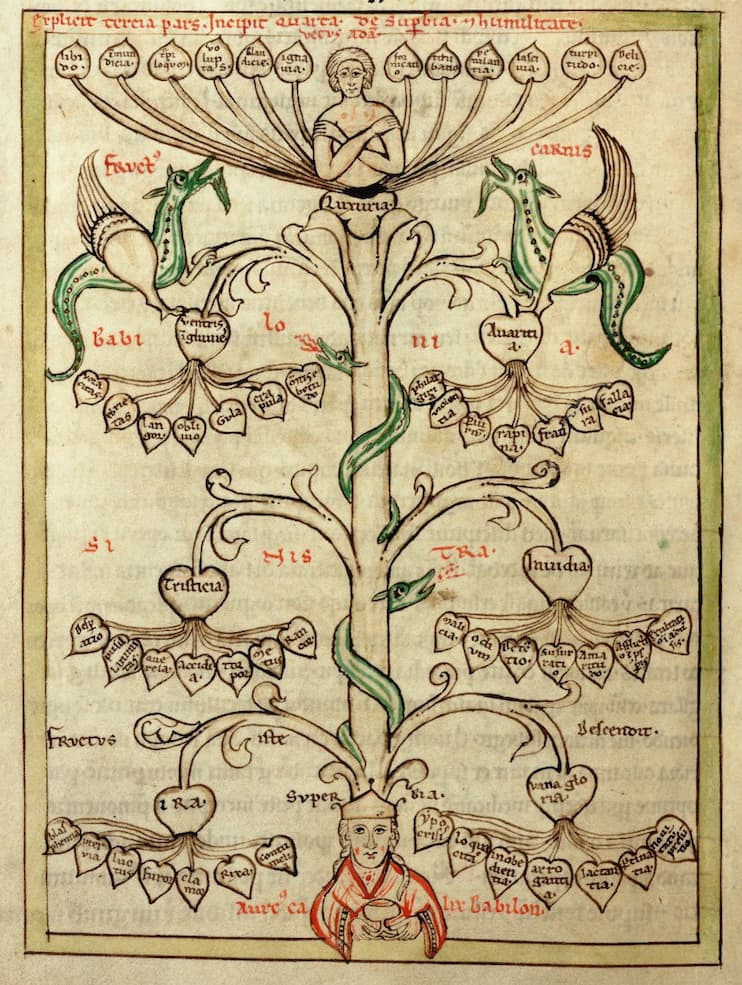
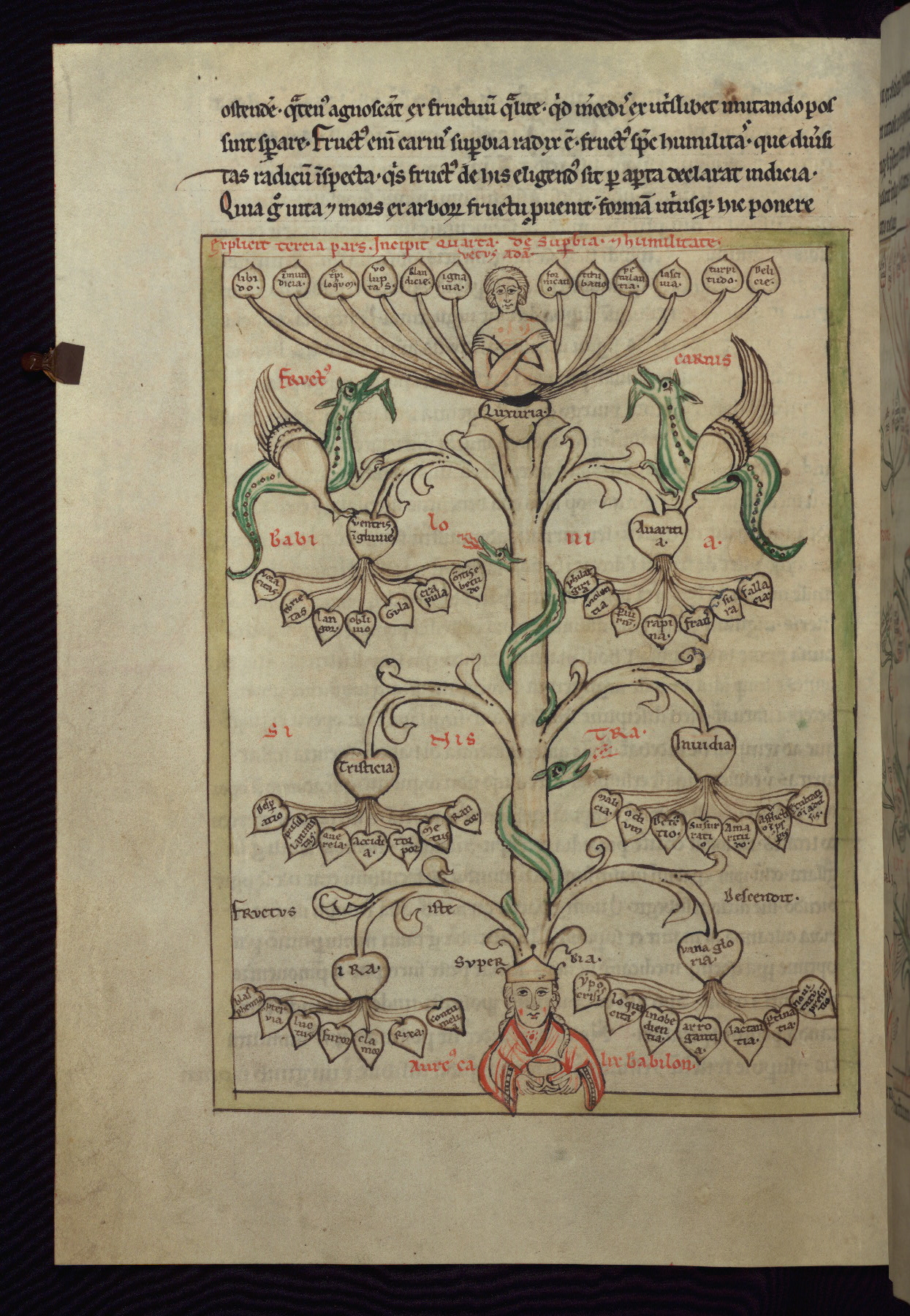
Attribution: By Anonymous – Speculum Virginum, Tree of Vices, Walters Art Museum Ms. W.72, fol. 25v. Immediate source: thedigitalwalters.org[1], Public Domain, Link
The Struggle Against Vices: How to Start
The process of overcoming these habits is not quick. Breaking free requires intentional effort and reliance on grace. Here are five steps to begin the battle today:
- Recognize the Vice: You cannot fight an invisible enemy. Honest self-reflection (Examination of Conscience) is the first step.
- Cultivate Virtuous Habits: Do not just “stop” the sin; “start” the virtue. If you struggle with Pride, actively seek out humiliation or unnoticed service.
- Go to Confession: The Sacrament of Reconciliation breaks the chain of sin. The grace of the Sacrament strengthens you specifically against the sins you confess.
- Seek Accountability: Find a spiritual director or a trusted friend to keep you on the right path.
- Persevere: Overcoming vice is a lifelong process. St. Paul encourages us to “run so as to win.” Do not be discouraged by falls; get up, confess, and begin again.
Learn more about growing in the life of virtue.
Conclusion
Understanding and overcoming the vices is indispensable to the spiritual life. And knowing where to begin can be difficult. Our Catholic faith assures us that we can begin with any vice, and as we gain ground with the corresponding virtue, we will receive more insight regarding other vices in our lives. As we grow in one virtue, overcoming its vice, we are helped immensely to overcome other vices. Therefore, by engaging in the battle through prayer and God’s grace, we will progress quickly in our spiritual quest for holiness.
Let us pray for the grace to honestly consider and recognize which vice we struggle with the most and ask God for the strength to practice its opposing virtue. There may be successes and failures and many opportunities for confession, but with a sure intent on our part, God will grant us all that we need to break free from vice. And God will not abandon us on this long and sometimes difficult road. Remember, it is He “at work in [us] both to will and to work for His good pleasure.” (Philippians 2:13) It is He, Himself, stirring up the desire within us to conquer vice and grow in virtue. And “if God is for us, who is against us?” (Romans 8:31)
Frequently Asked Questions About the 7 Deadly Sins
1. Are the 7 Deadly Sins listed in the Bible?
The specific list of “Seven Deadly Sins” does not appear in a single verse in the Bible. However, the sins themselves—pride, greed, lust, etc.—are condemned throughout Scripture. For example, Proverbs 6:16-19 lists “six things the Lord hates,” including “haughty eyes” (pride) and “hands that shed innocent blood” (wrath). The list of seven was later formalized by Pope St. Gregory the Great in the 6th century to help Christians identify the root causes of their spiritual struggles.
2. Which of the 7 Deadly Sins is considered the worst?
Pride is considered the worst and most dangerous of the sins. St. Thomas Aquinas and the Church Fathers taught that Pride is the “Queen of Vices” because it is the root of all other sins. It is the excessive love of one’s own excellence and the refusal to submit to God’s authority. This was the original sin of Satan.
3. What is the difference between a “Deadly” sin and a “Mortal” sin?
This is a common confusion. The “7 Deadly Sins” are technically called Capital Sins (from the Latin caput, meaning “head”). They are called “deadly” not because they are always mortal sins that cut us off from God’s grace, but because they are the “heads” or leaders that give birth to other sins. For example, the Capital Sin of Sloth might lead you to the mortal sin of missing Mass on Sunday without sufficient cause.
4. What are the 7 Heavenly Virtues?
The 7 Heavenly Virtues are the specific cures (or antidotes) for the 7 Deadly Sins. They are:
- Humility (cures Pride)
- Charity or Brotherly Love (cures Envy)
- Patience/Meekness (cures Wrath)
- Diligence (cures Sloth)
- Generosity (cures Greed)
- Temperance (cures Gluttony)
- Chastity (cures Lust)
5. Can the 7 Deadly Sins be forgiven?
Yes, absolutely. No sin is greater than God’s mercy. Because these sins are deep-seated habits (vices), they often require patience and the grace of the Sacraments to overcome. Catholics are encouraged to confess these sins in the Sacrament of Reconciliation, where they receive not only forgiveness but also the sacramental grace to fight against them in the future.
Further Resources for Overcoming Vice
The battle against the 7 Deadly Sins is not fought alone. To deepen your understanding and equip yourself with the spiritual weapons needed for victory, explore these related guides:
- Growing in the Virtue of Mortification – Discover how the voluntary practice of self-denial acts as “spiritual training” to strengthen your will against temptation.
- Catholic Mental Prayer: A Beginner’s Guide – Virtue requires grace, and grace comes through prayer. Learn the essential steps to start a daily conversation with God.
- Unraveling Sins of the Tongue – Pride and Envy often manifest through our speech. Learn how to conquer gossip, detraction, and complaining.
- Understanding the Life of Virtue – Go deeper into the theology of how habits are formed and how to build a consistent character of holiness.
- The Holy Eucharist: Source of Our Strength – We cannot overcome sin by willpower alone. Read how the Blessed Sacrament provides the supernatural fuel for the Christian life.