
Which saint is known as the patron of lost causes? If you answered St. Jude, you're already on your way to becoming a Catholic trivia expert! But it's about much more than just knowing random facts about the faith—it's a dynamic way to deepen your understanding of Church teachings, deepen your spiritual life, and make learning about the faith genuinely enjoyable.
Whether you're preparing for Confirmation, teaching your children about the faith, or simply want to grow in your knowledge of Catholic traditions, engaging with trivia questions can transform dry facts into fun moments of discovery. So let’s explore the world of Catholic trivia, share challenging questions across multiple difficulty levels, and introduce you to CateQuiz!—an innovative Catholic trivia game that makes learning about your faith as easy as tapping your phone.
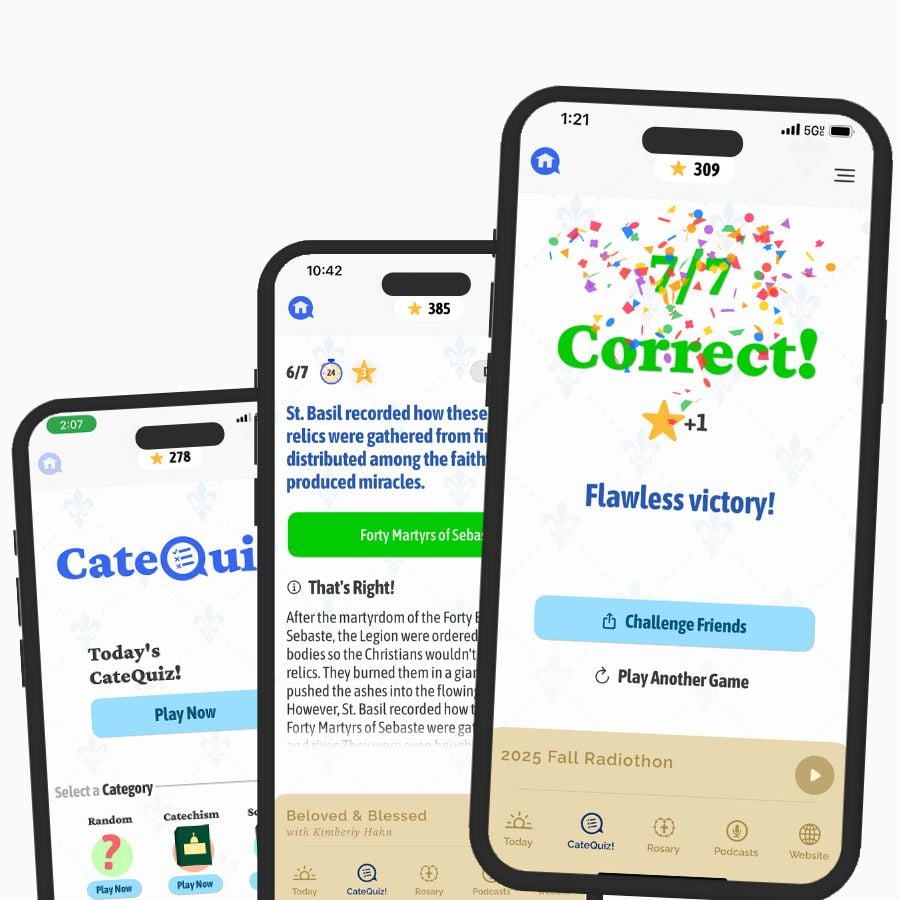
It's a collection of quiz-style questions about Catholicism - Facts, details, and information about Catholic faith, history, traditions, and practices that can be used for games or educational purposes. While the word "trivia" sometimes suggests something inconsequential, Catholic Trivia explores the rich depths of faith that are anything but trivial to those who cherish the Church's teachings. It "gamifies" learning the faith and invites us to grow and explore through an engaging, question-and-answer format that challenges memory, encourages research, and sparks meaningful conversations about what we believe and why.
The scope of Catholic trivia is amazingly broad, covering several key categories:
Scripture: Questions about both Old and New Testament stories, biblical figures, parables, miracles, and the historical context of sacred texts form a foundational category.
The Catechism: Questions about the doctrines and dogmas of the Catholic faith are organized according to the various Catechisms that have been published over the centuries.
Saints and Their Feast Days: With thousands of recognized saints, this category explores the lives of holy men and women, their patronages, feast days, and the inspiring stories of their journeys to sanctity.
Church History: From the early Church fathers to ecumenical councils, this area covers pivotal moments in Catholic history, including the development of doctrine and the spread of Christianity throughout the world.
Sacraments and Liturgy: Questions about the seven sacraments, the Mass, liturgical seasons, vestments, and sacred rituals help Catholics understand the visible signs of invisible grace in their lives.
Catholic Prayers and Devotions: This category explores traditional prayers like the Rosary, novenas, the Divine Mercy Chaplet, and other devotional practices that have sustained Catholic spiritual life for centuries.
The educational and spiritual benefits go far beyond simple memorization. Trivia serves to deepen study, prompting participants to ask "why" and "how" questions that lead to genuine theological understanding. It helps newcomers to the faith gain foundational knowledge while giving lifelong Catholics opportunities to discover aspects of their tradition they may have never encountered. Whether you're a cradle Catholic or a recent convert, Catholic trivia offers something for everyone.
Ready to test your knowledge? Here's a collection of Catholic trivia questions spanning three difficulty levels.
Q: How many sacraments are there in the Catholic Church?
A: Seven sacraments—Baptism, Confirmation, Eucharist, Reconciliation (Confession), Anointing of the Sick, Holy Orders, and Matrimony.
Q: What is the first book of the Bible?
A: Genesis, which means "beginning" or "origin," and tells the story of creation and the early patriarchs of the faith.
Q: What prayer begins with "Hail Mary, full of grace"?
A: The Hail Mary (or Ave Maria), one of the most beloved Catholic prayers that honors the Blessed Virgin Mary.
Q: On what day do Catholics commemorate the resurrection of Jesus?
A: Easter Sunday, which is the most important feast in the Catholic liturgical calendar.
Q: What are the four Gospels?
A: Matthew, Mark, Luke, and John—the four accounts of Jesus Christ's life, ministry, death, and resurrection.
Q: What do Catholics call the season of preparation before Christmas?
A: Advent, a four-week period of joyful anticipation and spiritual preparation for the celebration of Christ's birth.
Q: What does the term "Eucharist" mean?
A: It comes from the Greek word "eucharistia," meaning "thanksgiving." It refers to the sacrament in which bread and wine become the Body and Blood of Christ.
Q: Who was the first pope?
A: St. Peter, one of Our Lord’s twelve apostles, whom Christ designated as the rock upon which He would build His Church (Matthew 16:18).
Q: What is the Immaculate Conception?
A: The dogma that Mary, the Mother of God, was preserved from original sin from the moment of her conception. This is often confused with the virgin birth of Jesus, but they are different teachings.
Q: What council produced the Nicene Creed?
A: The First Council of Nicaea in 325 AD, though the version we use today was finalized at the First Council of Constantinople in 381 AD.
Q: What is the liturgical color for Ordinary Time?
A: Green, which symbolizes hope and growth in the faith during the Church's ordinary seasons outside of major feast periods.
Q: What is the difference between a venial sin and a mortal sin?
A: A mortal sin is a grave violation of God's law that destroys charity in the heart and turns a person away from God (requiring grave matter, full knowledge, and deliberate consent). A venial sin is a lesser offense that wounds but does not destroy the divine life in the soul.
Q: How many ecumenical councils has the Catholic Church held?
A: Twenty-one ecumenical councils, from the First Council of Nicaea (325 AD) to the Second Vatican Council (1962-1965).
Q: What is transubstantiation?
A: The theological term for the change of the whole substance of bread and wine into the Body and Blood of Christ during the consecration at Mass, while the appearances of bread and wine remain.
Q: Who wrote the "Summa Theologica"?
A: St. Thomas Aquinas, the great Dominican theologian and Doctor of the Church, who produced this comprehensive work of systematic theology in the 13th century.
Q: What are the four marks of the Church?
A: One, Holy, Catholic, and Apostolic—as professed in the Nicene Creed, these characteristics identify the true Church established by Christ.
Catholic trivia isn't just for individual study—it's a versatile tool that can enrich family life, energize parish groups, and enhance personal faith formation in creative ways.

Transform ordinary moments into opportunities for faith formation by incorporating Catholic trivia into your daily routine. Sunday dinner tables become engaging forums for discussion when you pose a question of the week, encouraging even young children to share what they've learned in religious education classes. Long car rides to visit relatives or vacation destinations pass more quickly and meaningfully when family members take turns asking each other Catholic trivia questions, turning travel time into teaching time.
For homeschooling families, Catholic trivia is an excellent supplement to a formal curriculum. Rather than simply reading textbook chapters about Church history or the saints, children can engage with the material through game-based learning that reinforces retention and makes studying feel less like work. Create a family competition where correct answers earn points redeemable for special privileges or treats, motivating everyone to dive deeper into their faith knowledge.
Youth groups consistently struggle to find activities that are both entertaining and spiritually formative, but Catholic trivia tournaments provide the perfect solution. Divide teens into teams and host monthly competitions with themes like "Saints of the Americas" or "Biblical Women," creating excitement around learning while building community bonds. The friendly competition naturally leads to discussions about why certain answers matter, opening doors for catechesis.
Parish festivals and fundraisers can incorporate Catholic trivia, allowing families to test their knowledge together, perhaps with small prizes for high scorers. These events become evangelization opportunities when curious visitors engage with questions about the faith and discover aspects of Catholicism they'd never encountered.
RCIA programs benefit tremendously from incorporating trivia into their sessions. Rather than lecture-only formats, catechists can use trivia questions to assess understanding, spark discussions, and help candidates and catechumens feel more confident about their growing knowledge of the faith. Adult education sessions similarly become more dynamic when participants actively engage with material through quiz formats rather than passive listening.
Many Catholics desire to grow in their knowledge of the faith but struggle to find time for extensive reading or formal classes. Catholic trivia offers a solution by enabling bite-sized learning that fits into busy schedules. Spend five minutes each morning answering a few questions while drinking your coffee, gradually building a comprehensive understanding of Catholic teaching through consistent, small efforts.
For those preparing for the Sacrament of Confirmation, whether as teens or adults, Catholic trivia is an engaging way to review essential knowledge about the faith. Instead of cramming, candidates can regularly test themselves on Church teachings, sacramental theology, and the gifts and fruits of the Holy Spirit.
Perhaps most importantly, engaging with Catholic trivia cultivates intellectual humility and curiosity. When you discover gaps in your knowledge—realizing you can't name all seven gifts of the Holy Spirit or don't know the significance of particular feast days—you're motivated to learn more, elevating trivia from a game into genuine growth.
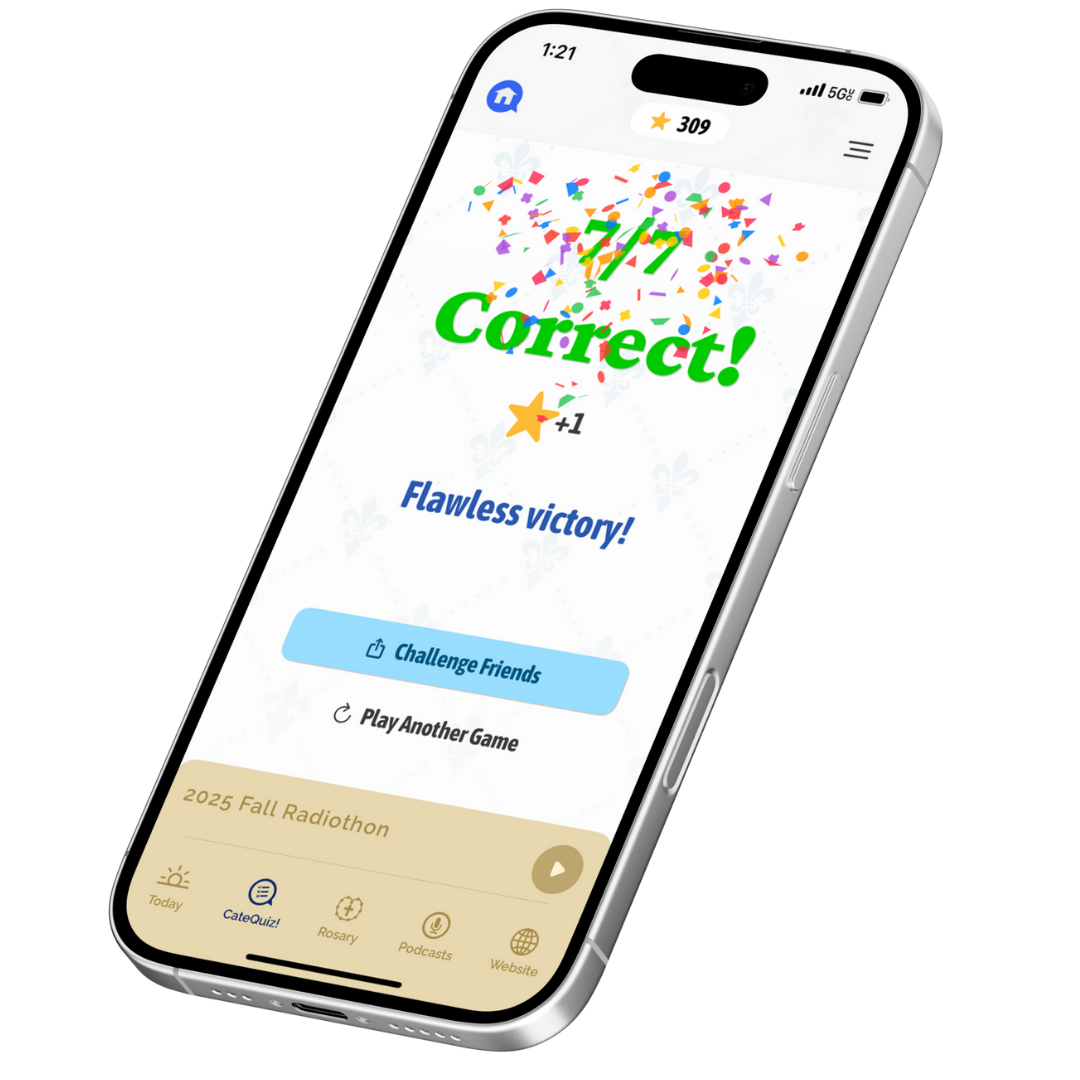
The digital age has revolutionized how Catholics can engage with trivia, making faith formation more accessible than ever before. While traditional board games and books still have their place, mobile apps are a great new way to incorporate Catholic trivia into daily life.
When it comes to Catholic trivia apps, CateQuiz! is a fantastic experience for anyone looking for an engaging, comprehensive, and completely free way to test and expand their faith knowledge. Available on the Covenant Network App for both iOS and Android devices, CateQuiz! transforms your smartphone into a powerful tool for evangelization and personal growth.
What makes CateQuiz! exceptional is its fun interactions, points multipliers, and leader boards. The app features multiple difficulty levels, helping both beginners and lifelong Catholics with decades of faith formation.
With over 3000 questions, you'll constantly encounter fresh content that covers the breadth of Catholic teaching. From obscure saints to profound theological concepts, from scripture verses to Church History, with CateQuiz! You never stop learning.
One of CateQuiz!'s most exciting features is that it allows you to challenge friends and go head to head to see who comes out on top. Best of all, it’s completely free to download and use. The Covenant Network App provides this incredible resource at no cost!
Beyond digital apps, several other resources can complement your Catholic trivia journey. Traditional board games like "Catholic Trivial Pursuit" provide screen-free options for family game nights. Books of Catholic trivia questions make excellent gifts for Confirmation candidates or anyone looking to expand their knowledge through offline resources.
Various websites offer free online quizzes covering specific topics within Catholicism, useful for targeted study on particular subjects. However, these scattered resources lack the cohesive, always-available convenience of a dedicated mobile app.
Ready to begin your Catholic trivia journey? Getting started is simple...
Step 1: Download the Covenant Network App
Visit the App Store (for iPhone users) or Google Play Store (for Android users) and search for "Covenant Network." Download the free app to your device. The app provides access not only to CateQuiz! but also to other valuable Catholic content, making it a comprehensive resource for your faith life.
Step 2: Explore CateQuiz! Features
Once you've installed the Covenant Network App, navigate to CateQuiz! and take some time to familiarize yourself with the interface. Browse the different categories available, check out the difficulty levels and leaderboards. Understanding how the app works ensures you'll get maximum benefit from your trivia sessions.
Step 3: Play CateQuiz! and Challenge Friends and Family
Have fun and play the game! Remember, learning is more fun when it’s shared. Invite family and friends to download the app and challenge them to friendly competitions. Compare scores, discuss interesting questions you encounter, and celebrate each other's growing knowledge. This social dimension adds another level of fun to the game.
Step 4: Make It a Regular Habit
Consistency matters more than intensity when building knowledge. Rather than marathon trivia sessions once a month, commit to just one quiz daily. Perhaps make it part of your morning routine alongside coffee and prayer, or use it as a mental break during your workday. Small, regular doses of Catholic trivia will yield far better long-term results than sporadic intensive study.
Additional tips for staying motivated include setting personal goals, rewarding yourself for milestones achieved, and connecting your trivia learning to your broader spiritual life. When you encounter a question about a saint you don't know, spend a few minutes researching that saint's life. When you miss a theology question, look up the correct answer in the Catechism. This approach transforms trivia from mere gaming into genuine catechesis.
While Catholic trivia might seem like just an entertaining pastime, engaging regularly with questions about the faith produces spiritual benefits that extend far beyond the game itself.
First and foremost, trivia strengthens your understanding of what the Church actually teaches. Many Catholics absorbed bits and pieces of doctrine during childhood religious education but never developed a comprehensive, adult understanding of their faith. Consistent exposure to questions covering all aspects of Catholicism fills knowledge gaps and corrects misconceptions, giving you confidence in articulating what you believe.
This knowledge creates opportunities for evangelization in your daily life. When coworkers ask questions about Catholic practices during Lent, when relatives wonder why Catholics pray to saints, when neighbors are curious about the Pope's role—your trivia-enhanced knowledge equips you to provide clear, accurate answers. You become a witness to the faith not through preaching but through confident, informed conversation.
Engaging with Catholic trivia contributes to a lifelong learning mindset about your faith. There's always more to discover, always deeper levels of understanding to pursue, always new saints to meet and new aspects of Church history to explore.
Finally, Catholic trivia simply brings fun to faith formation. Learning about the faith doesn't have to feel like tedious homework. The playful, game-based approach of quality trivia resources makes studying enjoyable. This joy in learning reflects the truth that our faith is good news—something to be celebrated, explored, and shared with enthusiasm.
Don't wait to begin your Catholic trivia adventure. Download the Covenant Network App today and discover how enjoyable faith formation can be. Challenge yourself with questions that stretch your understanding, compete with friends to make learning social, and watch as your confidence in discussing and living your Catholic faith grows.
Share this gift with others in your life—your children, your spouse, your parish community, your RCIA candidates. Catholic trivia has the power to transform how we approach religious education, making it engaging, accessible, and genuinely fun.
As the great Catholic convert Blessed John Henry Newman once wrote, "To live is to change, and to be perfect is to have changed often." Let Catholic trivia be one catalyst for positive change in your life, helping you grow daily in understanding, love, and commitment to the Church Christ founded. Your adventure in Catholic knowledge starts now—are you ready to accept the challenge?
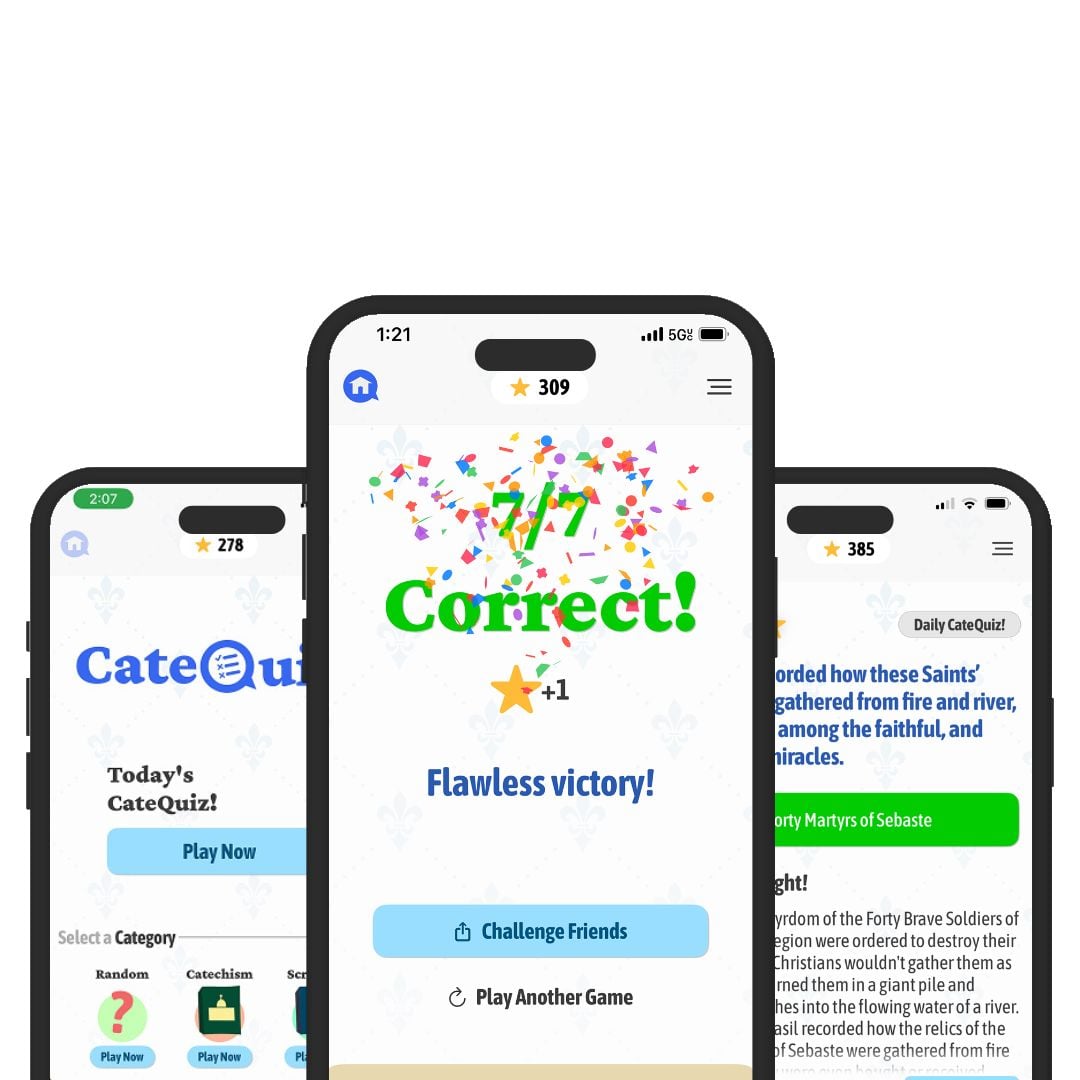

A new app for daily prayer and the interior life, coming to iOS.