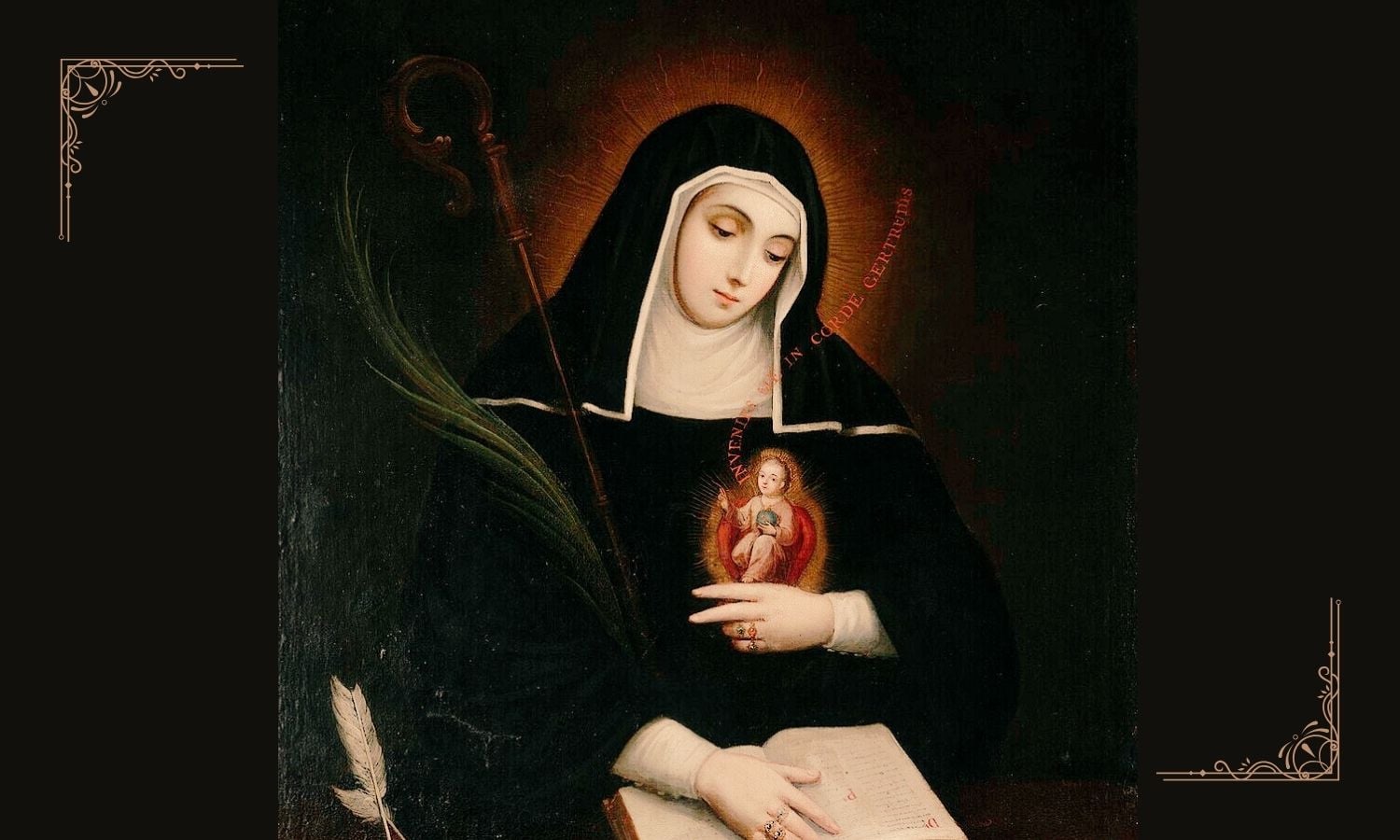
When the Blessed Virgin appeared to St. Catherine Labouré in 1830 and asked for the medal to be made, she did not leave the wording to others. The prayer was part of the vision, framing the image in letters of gold. This page gathers the prayers of the Miraculous Medal devotion: the invocation on the medal itself, the Act of Consecration, prayers for healing through the medal, and the simple daily rhythm by which the medal becomes a prayer you carry all day.
The Prayer on the Miraculous Medal
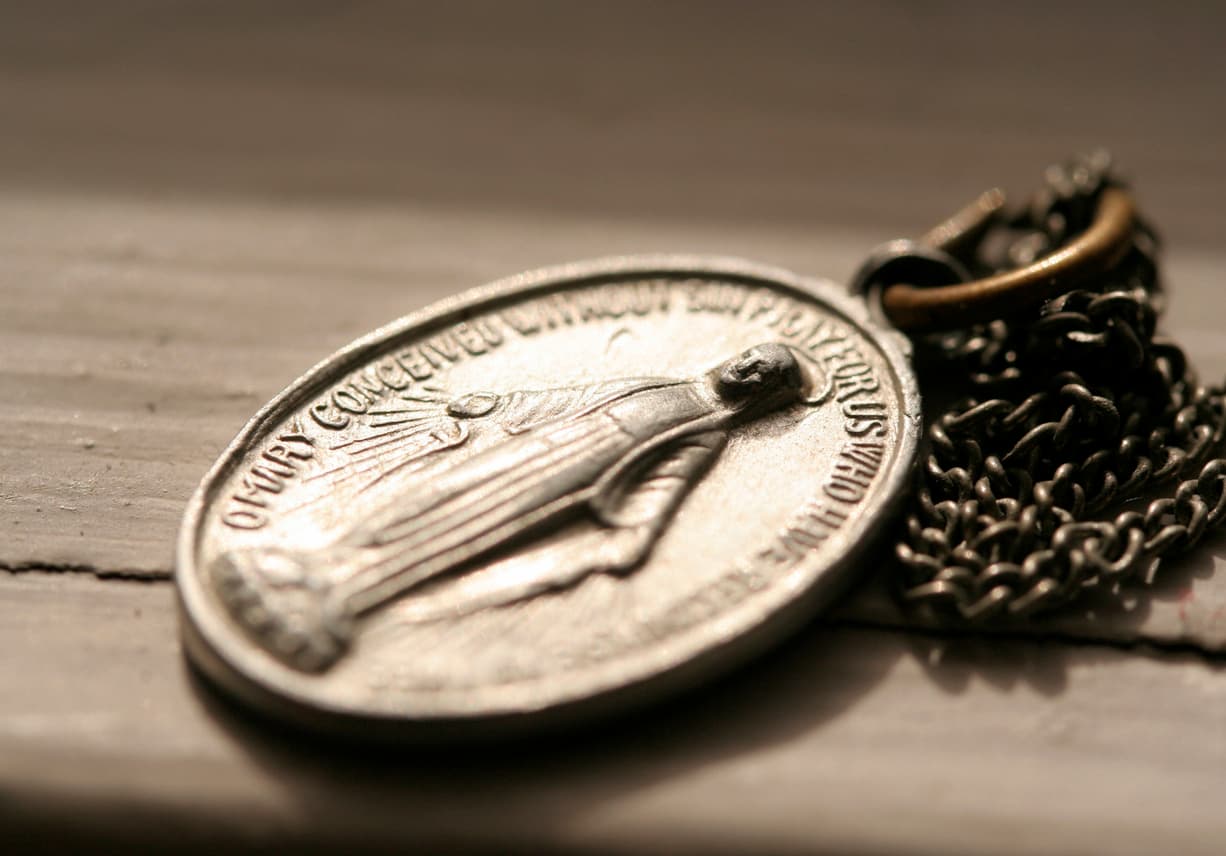
The prayer of the Miraculous Medal is the invocation engraved around the image of Our Lady, the words she gave to St. Catherine:
O Mary, conceived without sin, pray for us who have recourse to thee.
Every word is deliberate. Conceived without sin professes the Immaculate Conception, twenty-four years before the Church solemnly defined it. Pray for us asks not magic but intercession: Mary bringing our needs to her Son. And who have recourse to thee names the one condition Our Lady attached to the medal’s graces, that we actually come to her, and come with confidence. The old commentaries on the medal observe that the invocation is two prayers in one: an act of faith (professing her Immaculate Conception) and a petition (claiming her intercession), and that because she composed it herself, for this very use, we can be certain no prayer is more pleasing to her or more surely heard.
The prayer is traditionally repeated three times, but its real home is the whole of the day: prayed on waking, prayed whenever the medal is touched, prayed in a moment of temptation or fear. It takes five seconds. Prayed with confidence, the tradition of nearly two centuries testifies, it moves heaven.
How to Pray the Miraculous Medal Through the Day
There is no required formula for the devotion beyond the invocation itself — which makes it one of the most livable devotions in the Church. A simple pattern many follow:
- On waking: pray the invocation once, slowly, and kiss or touch the medal, entrusting the day to Our Lady before it begins.
- Through the day: each time you notice the medal, putting it on, touching it, catching it in a mirror, pray the invocation and attach your intention: …and obtain for me the grace I need this hour.
- In moments of need: temptation, anxiety, an impossible conversation ahead, the invocation is short enough to pray in a single breath, which is exactly when it is needed most.
- At night: pray it a final time, adding the intention Our Lady loves best: the grace of a happy death, for yourself and for those you love.
This is the “recourse” the prayer speaks of: not an occasional visit but a habit of turning. Our Lady told St. Catherine that graces abound for those who ask with confidence, and showed her, in the same vision, the gems whose rays never shone: the graces no one asks for. The whole devotion is a remedy for that forgetfulness.
A one-line prayer carried through the whole day is the seed of a real interior life. If that rhythm is taking root in you, BEHOLD, our new app for daily prayer with Fr. Chase Hilgenbrinck, was built to help it grow — morning, midday, and night.
The Traditional Aspirations of the Medal
The devotional tradition grew a beautiful habit out of the invocation: extending it with a petition matched to the moment. The 1940 Book of the Miraculous Medal preserves a whole cycle of these traditional aspirations, each fitting the invocation to a need of the interior life:
- For firmer faith
- For courage in suffering
- For zeal for the souls around us
- For union with the Heart of Jesus through the heart of His Mother
- For fidelity to one’s daily duties.
The pattern is simple and endlessly adaptable: pray the invocation, then name the grace — O Mary, conceived without sin, [obtain for me this grace]; pray for us who have recourse to thee.
An Older Prayer of the Devotion: “Most Holy Virgin, I Believe and Confess”
The old rite of the Perpetual Novena opened with a prayer that has largely fallen out of the modern leaflets, a 19th-century indulgenced prayer from the Raccolta, professing the very mystery the medal proclaims:
Most Holy Virgin, I believe and confess thy holy and Immaculate Conception, pure and without stain. O most pure Virgin, through thy virginal purity, thy Immaculate Conception, and thy glorious prerogative of Mother of God, obtain for us from thy Divine Son humility, charity, great purity of mind and body, the gift of prayer, a holy life, and a happy death. Amen.
Praying it alongside the invocation joins the wearer of the medal to the older stream of the devotion, the same profession of the Immaculate Conception, asked in full.
The Act of Consecration to Our Lady of the Miraculous Medal
For those who wish to give the devotion its fullest form, the tradition offers an Act of Consecration, a prayer of belonging, by which the wearer places the whole of life under Our Lady’s care through the sign of the medal:
Virgin Mother of God, Mary Immaculate, we dedicate and consecrate ourselves to thee under the title of Our Lady of the Miraculous Medal.
May this Medal be for each one of us a sure sign of thy affection for us and a constant reminder of our duties toward thee. Ever while wearing it, may we be blessed by thy loving protection and preserved in the grace of thy Son.
O most powerful Virgin, Mother of our Savior, keep us close to thee every moment of our lives. Obtain for us, thy children, the grace of a happy death; so that, in union with thee, we may enjoy the bliss of heaven forever. Amen.
Many pray this consecration once, on the day they first wear a blessed medal, or on the feast of Our Lady of the Miraculous Medal, November 27, and renew it each year.
Praying the Miraculous Medal for Healing
From its first days the medal has been an instrument of healing, it earned the name “Miraculous” in the cholera wards of Paris, where the Daughters of Charity gave medals to the sick and the dying. Praying the medal for healing follows that same pattern:
- For yourself: wear the blessed medal and pray the invocation with your need named plainly: O Mary, conceived without sin, pray for us who have recourse to thee, and obtain for me healing of body and soul, if it be for the glory of God.
- For someone else: the older tradition is the most beautiful one, give them a blessed medal. If they will not wear it, you may keep it near them and pray the invocation daily on their behalf. Countless healings and conversions in the medal’s history began exactly this way.
- For the healing no one sees: the medal’s greatest recorded miracles are not of the body but of the soul: repentance, forgiveness, return to the sacraments. When you pray for a sick loved one, ask for both healings, and trust Our Lady to know which is the greater.
The Memorare: The Medal’s Companion Prayer
The Miraculous Medal devotion has always kept company with the Memorare, the great prayer of confidence. It opens the medal’s novena, and its spirit (“never was it known that anyone who fled to thy protection… was left unaided”) is the very confidence Our Lady asked of those who wear the medal:
Remember, O most gracious Virgin Mary, that never was it known that anyone who fled to thy protection, implored thy help, or sought thy intercession, was left unaided. Inspired with this confidence, I fly unto thee, O Virgin of virgins, my Mother! To thee I come; before thee I stand, sinful and sorrowful. O Mother of the Word Incarnate, despise not my petitions, but in thy mercy, hear and answer me. Amen.
The Miraculous Medal Novena
The most beloved extended form of the devotion is the nine-day Miraculous Medal Novena, traditionally prayed November 18–27 before the feast — and prayed perpetually, in many churches every Monday, since 1930. The novena has its own complete guide with all the prayers and how to pray them.
A Note on “Powerful” Prayers
Many people search for the most powerful Miraculous Medal prayer. The honest Catholic answer is that the power was never in a formula. Our Lady attached the medal’s graces to one thing: confidence. The rays in Catherine’s vision shone in proportion to the trust of those who asked. The five-second invocation prayed with a pure trust and childlike confidence is more powerful than any longer prayer recited doubtfully. Generally speaking, the power of any personal prayer is in the purity of its intention and the faith, hope (trust or confidence) and charity of the one praying.
St. Maximilian Kolbe and the Medal
No one took the medal’s power for conversion more seriously than St. Maximilian Kolbe, who made the Miraculous Medal the weapon of his worldwide apostolate, the Militia Immaculatae, calling it his “bullet” of grace. He expanded the medal’s invocation into a longer form asking Our Lady’s intercession especially for those far from the Church, a prayer his movement prays to this day.
Frequently Asked Questions
What is the Miraculous Medal prayer?
The Miraculous Medal prayer is the invocation engraved on the medal, composed by Our Lady herself in the 1830 apparition: “O Mary, conceived without sin, pray for us who have recourse to thee.” It is traditionally prayed three times, and many pray it throughout the day whenever they touch the medal.
Is there a powerful Miraculous Medal prayer for a special intention?
The invocation on the medal is the devotion’s own prayer, and Our Lady attached its power to confidence rather than length: the graces, she told St. Catherine, abound for those who ask with trust. For a sustained intention, the nine-day Miraculous Medal Novena is the traditional form.
How do you pray the Miraculous Medal for healing?
Wear the blessed medal (or give one to the person in need) and pray the invocation daily with the healing named plainly, entrusting it to God’s will. The medal earned its name through healings in the Paris cholera epidemic, and praying it for the sick, especially by giving them a medal, is the oldest use of the devotion.
Do you have to say a specific prayer when wearing the Miraculous Medal?
No prayer is strictly required. A blessed medal worn in faith is itself a silent prayer. But the invocation on the medal is short enough to pray many times a day, and the devotion’s fruits have always been tied to praying it with confidence.