
While the contemplation of Mary’s grief dates back to the early Church Fathers, the formalized devotion to the Seven Sorrows—also known as the Seven Dolors—gained its liturgical structure through the Servite Order in the 13th century. However, it was St. Bridget of Sweden who elevated this practice to a global scale in the 14th century.
Through her mystical revelations, Our Lady issued a heart-wrenching lament: “I look around at all who are on earth, to see if by chance there are any who pity Me, and meditate upon My Sorrows; and I find that there are very few.”
Our Lady explicitly requested that her children meditate daily on her seven specific "dolors," attaching seven magnificent promises to the recitation of seven Hail Marys. While the Church specifically honors this mystery during the month of September, it remains a powerful daily practice for those seeking to console the heart of Mary and draw closer to the Passion of her Son.
Our Lady revealed to St. Bridget that she would grant seven specific graces to those who honor her daily by meditating on her tears and sorrows while praying seven Hail Marys.
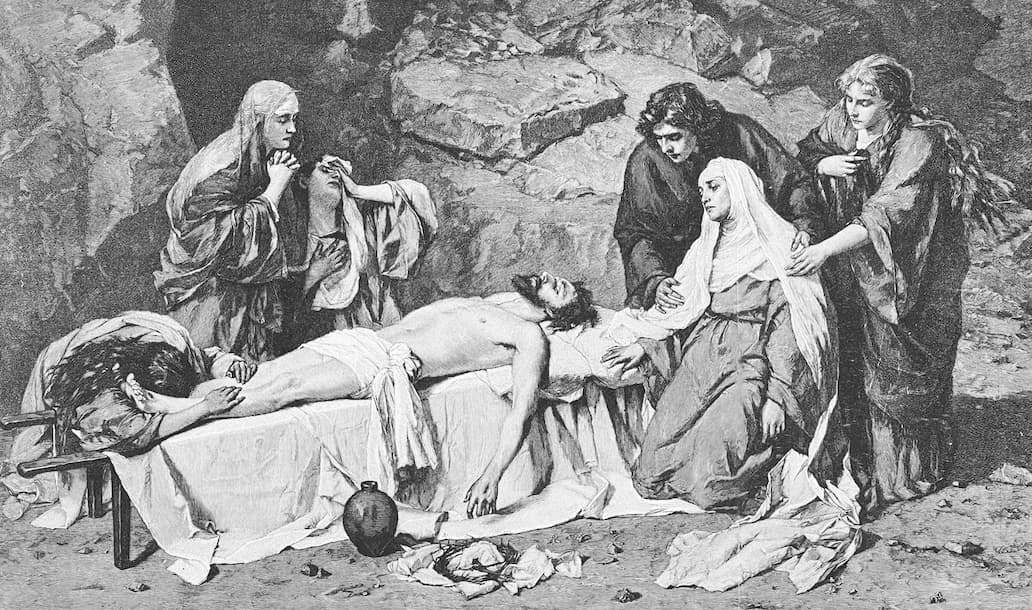
To practice this devotion, one meditates on each of the following seven events, typically followed by one Hail Mary for each.
As Mary presents the Infant Jesus in the Temple, the aged Simeon predicts that a sword of sorrow will pierce her soul. This is the "beginning of the end," where Mary’s joy is forever joined to the shadow of the Cross.
The Holy Family escapes in the night and travels to Egypt, fleeing the murderous intent of Herod. Mary experiences the sorrow of exile and the fear for her Child’s life, and the knowledge of the death of the Holy Innocents.
For three agonizing days, Mary and Joseph search for the young Jesus in Jerusalem. This represents the greatest interior pain: the perceived "loss" of God’s presence.
Mary watches her Son, beaten and disfigured, carrying the heavy wood of the Cross. Their eyes meet in a silent exchange of love and shared redemptive suffering.
Mary endures the three-hour agony of her Son. She becomes the "Queen of Martyrs" not by shedding her blood, but by the "martyrdom of the heart."
The Pietà. The Body of the Savior is placed in the arms of His Mother. She who once held Him as an infant now holds Him as the sacrificed Lamb.
Mary watches as the stone is rolled across the entrance of the tomb. She enters into the "Great Silence," waiting in perfect trust for the Resurrection.
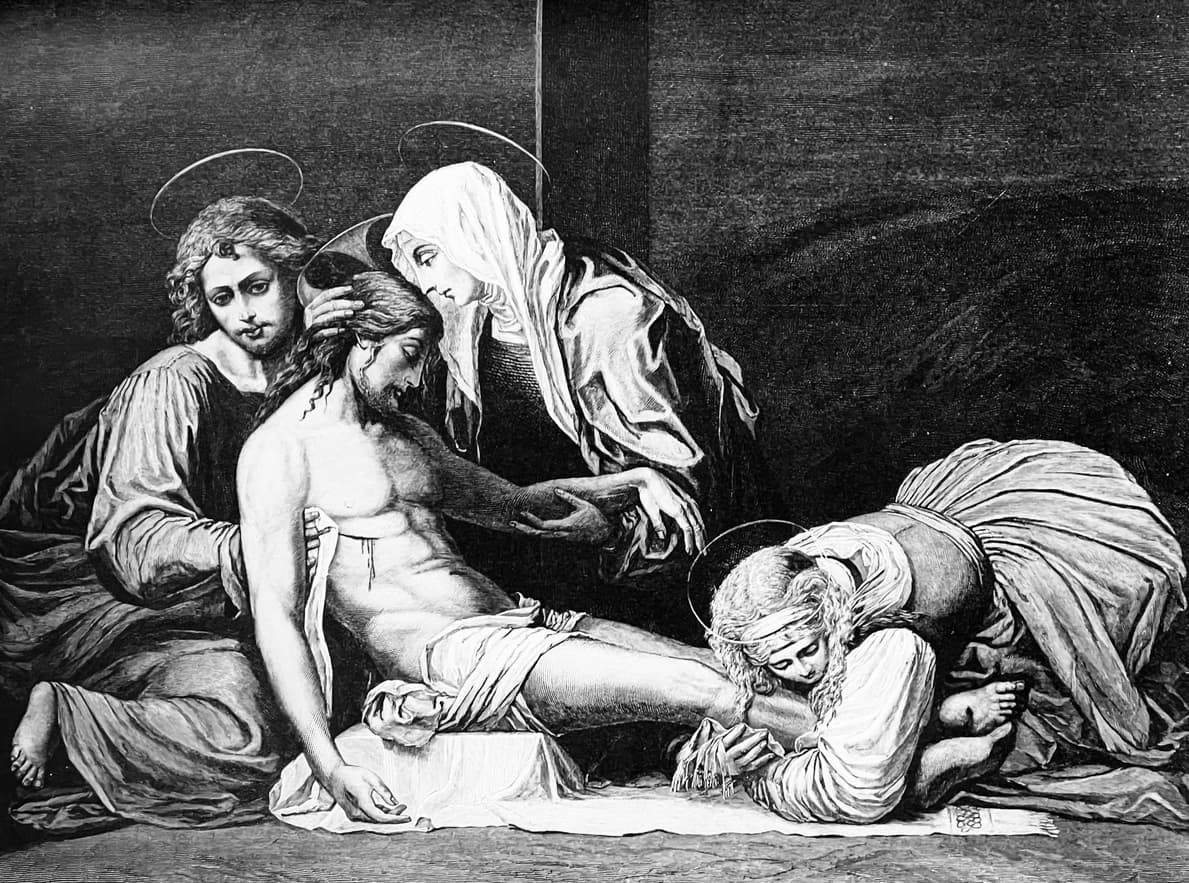
Though the devotion primarily consists of reflecting upon the sorrow and offering a Hail Mary, more structured prayers have been composed to guide the faithful in asking for specific graces. Here is one example:
O God, come to my assistance; O Lord, make haste to help me. Glory be to the Father, the Son, and the Holy Spirit, as it was in the beginning, is now, and ever shall be, world without end. Amen.
1. I grieve for you, O Mary most sorrowful, in the affliction of your tender heart at the prophecy of the holy and aged Simeon. Dear Mother, by your heart so afflicted, obtain for me the virtue of humility and the gift of the holy fear of God.
Hail Mary…
2. I grieve for you, O Mary most sorrowful, in the anguish of your most affectionate heart during the flight into Egypt and your sojourn there. Dear Mother, by your heart so troubled, obtain for me the virtue of generosity, especially toward the poor, and the gift of piety.
Hail Mary…
3. I grieve for you, O Mary most sorrowful, in those anxieties which tried your troubled heart at the loss of your dear Jesus. Dear Mother, by your heart so full of anguish, obtain for me the virtue of chastity and the gift of knowledge.
Hail Mary…
4. I grieve for you, O Mary most sorrowful, in the consternation of your heart at meeting Jesus as He carried His Cross. Dear Mother, by your heart so troubled, obtain for me the virtue of patience and the gift of fortitude.
Hail Mary…
5. I grieve for you, O Mary most sorrowful, in the martyrdom which your generous heart endured in standing near Jesus in His agony. Dear Mother, by your afflicted heart, obtain for me the virtue of temperance and the gift of counsel.
Hail Mary…
6. I grieve for you, O Mary most sorrowful, in the wounding of your compassionate heart, when the side of Jesus was struck by the lance before His Body was removed from the Cross. Dear Mother, by your heart thus transfixed, obtain for me the virtue of fraternal charity and the gift of understanding.
Hail Mary…
7. I grieve for you, O Mary most sorrowful, for the pangs that wrenched your most loving heart at the burial of Jesus. Dear Mother, by your heart sunk in the bitterness of desolation, obtain for me the virtue of diligence and the gift of wisdom.
Hail Mary…
Let Us Pray:
Let intercession be made for us, we beseech You, O Lord Jesus Christ, now and at the hour of our death, before the throne of Your mercy, by the Blessed Virgin Mary, Your Mother, whose most holy soul was pierced by a sword of sorrow in the hour of Your bitter Passion. Through You, O Jesus Christ, Savior of the world, Who with the Father and the Holy Spirit lives and reigns world without end. Amen.
Numerous saints have held a deep devotion to Our Lady of Sorrows, among them are the Seven Holy Servite Founders, St. Bridget of Sweden, and St. Alphonsus de Liguori.
The Seven Holy Servite Founders were pious businessmen of Florence in the early 13th century – a time of increasing self-reliance and worldliness in the Church. They left the business world and all their possessions to become mendicant penitents. Our Lady appeared to them, inspiring them to start the Order of the Servants of Mary and they called themselves The Servites. These saints established a devotion to Our Lady, focusing on her Seven Sorrows.
The devotion, as we know it today, was given to us by St. Bridget of Sweden. In her mystical visions, she received insights into the Seven Sorrows of the Virgin Mary, which became central to the devotion. Her revelations provided a framework for meditating on the emotional and spiritual sorrows that Mary experienced throughout her life. She established the Brigittine Order, which promoted Marian devotion, particularly to Our Lady of Sorrows. Their meditations on the Passion of Christ and the sorrows of Mary fostered a deeper spiritual connection with the suffering and compassion of Jesus and Mary.
By practicing this devotion, you are answering a direct request from the Mother of God. It is a key pillar of the Bridgettine spiritual legacy, alongside the 15 Prayers and the 12-Year Prayer.
St. Alphonsus de Liguori was an Italian Catholic bishop, theologian, and founder of the Redemptorists who also had a deep devotion to the Blessed Virgin Mary. He wrote extensively on her Seven Sorrows and emphasized the importance of meditating on them as a means of deepening one’s spiritual life and understanding the redemptive power of Christian suffering.
In his meditations, he wrote, “This great torment, then, which Mary endured for us—a torment which was more than a thousand deaths, deserves both our compassion and our gratitude. If we can make no other return for so much love, at least let us give a few moments this day to consider the greatness of the sufferings by which Mary became the Queen of martyrs; for the sufferings of her great martyrdom exceeded those of all the martyrs; being, in the first place, the longest in point of duration; and, in the second place, the greatest in point of intensity.”
St. Bridget’s mission was to ensure that the "Blows of the Passion" and the "Tears of the Mother" were remembered and venerated by the faithful, and that they be the source of moral renewal for a society in decay. By entering into Mary's sorrows, you are joining a movement of penance and conversion for the moral restoration of the world.
We invite you to explore these additional resources:
If you would like to learn more about the visionary who received these prayers and her tireless work for the reform of society, visit our biography of St. Bridget of Sweden.
No Subscriptions, NoPaywall, 100% Free!
Experience the richness of our Catholic Faith with the free Covenant Network app, now available on your iPhone or Android.


No Subscriptions, NoPaywall, 100% Free!
Experience the richness of our Catholic Faith with the free Covenant Network app, now available on your iPhone or Android.


An initiative of Covenant Network
A new app for daily prayer and the interior life, coming to iOS.