The Litany of Trust: A Modern Guide to Surrender and Peace
At its core, the Litany of Trust is...

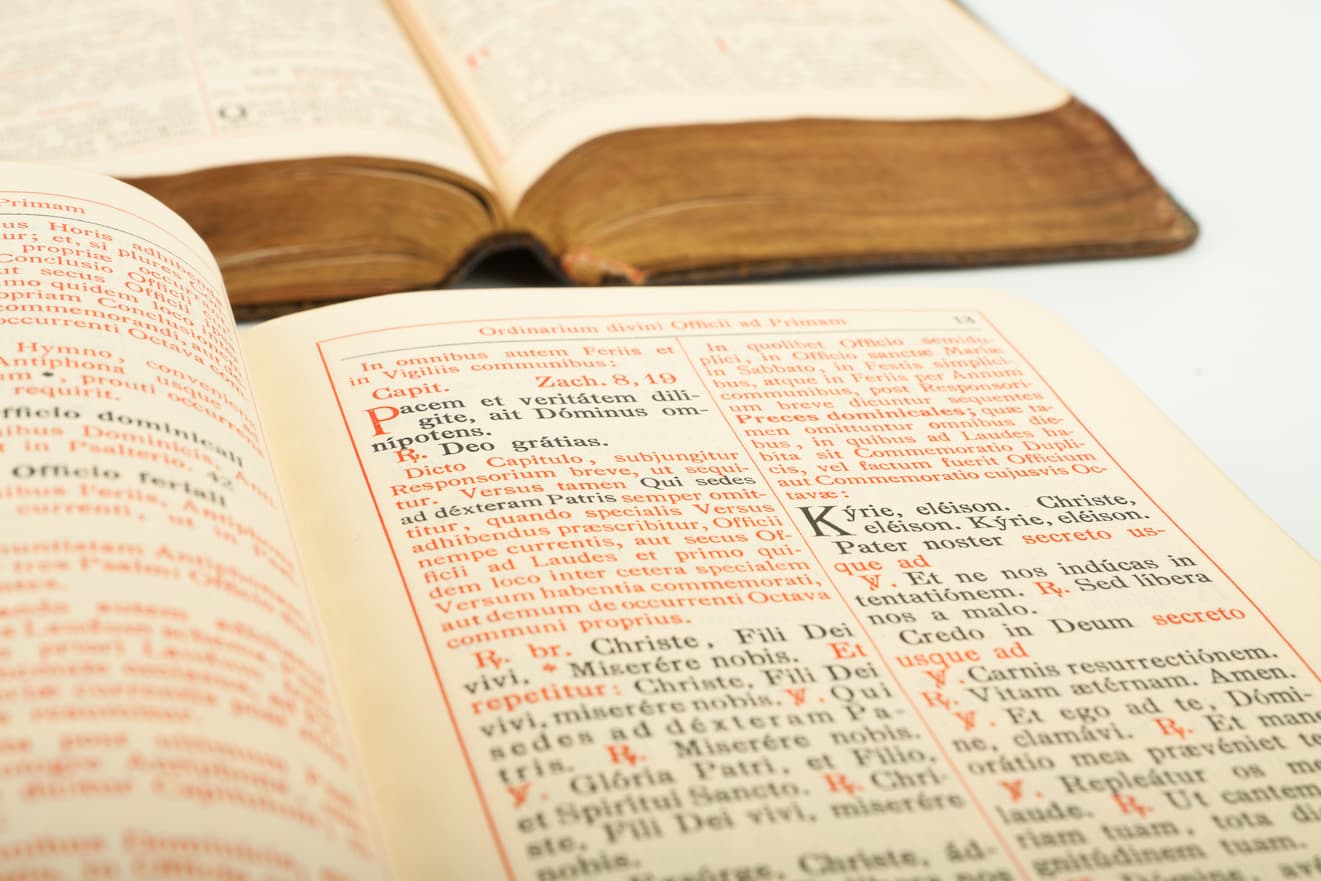
The word “litany” comes from the Greek litaneia, meaning a “supplication” or “earnest prayer.” In the Catholic tradition, a litany is a vocal form of prayer that consists of a series of petitions followed by a fixed response (such as “Pray for us” or “Have mercy on us”).
While many Catholics are familiar with the Litany of Loreto or the Litany of the Saints, these prayers are more than just lists of titles. They are seeds of contemplation designed to form our minds and hearts in grace. And beyond simply obtaining grace, praying litanies also helps to teach us:
The roots of the litany reach back to the Old Testament, most notably in Psalm 136, where every verse concludes with the refrain, “For His mercy endures forever.” In the early Church, litanies were often used during outdoor processions to ask for God’s protection during times of plague, famine, or war.
Because of their popularity, hundreds of litanies were composed over the centuries. To ensure theological accuracy, Pope Clement VIII issued a decree in 1601 that regulated the use of litanies in public worship. Today, while many “private” litanies exist for personal devotion, the Church officially recognizes several for public liturgical use, including those to the Sacred Heart, the Precious Blood, and the Holy Name of Jesus.
Below you will find our comprehensive collection of traditional and modern litanies. Each resource includes the full prayer text, historical context, and guidance on how to incorporate these devotions into your spiritual life.
These prayers focus on the attributes of Christ and the specific mysteries of His life and sacrifice.
Invoke the intercession of the Blessed Virgin Mary and the great heroes of our faith.
These prayers are specifically designed to help the soul overcome vice and grow in trust.
Litanies are versatile. They can be prayed alone in the quiet of a chapel or communally.
Yes. Under the current Enchiridion Indulgentiarum (Manual of Indulgences), the Church grants a partial indulgence to the faithful who devoutly recite any of the litanies approved by the Holy See for public or private use.
This is rooted in a broader “General Grant” found in the manual, which explains that a partial indulgence is granted to the faithful who, while performing their duties and bearing the difficulties of life, raise their minds to God with humble confidence and add—at least mentally—some pious invocation. Because litanies are essentially a series of these “pious invocations” or aspirational prayers, they are powerful tools for the remission of temporal punishment.
For private prayer, yes! Many people find it helpful to create a “personal litany” of saints they have a devotion to. However, only the Church-approved litanies are used in official liturgical settings.
No Subscriptions, NoPaywall, 100% Free!
Experience the richness of our Catholic Faith with the free Covenant Network app, now available on your iPhone or Android.


No Subscriptions, NoPaywall, 100% Free!
Experience the richness of our Catholic Faith with the free Covenant Network app, now available on your iPhone or Android.


An initiative of Covenant Network
A new app for daily prayer and the interior life, coming to iOS.