Prefer to Listen? (7 Mins)
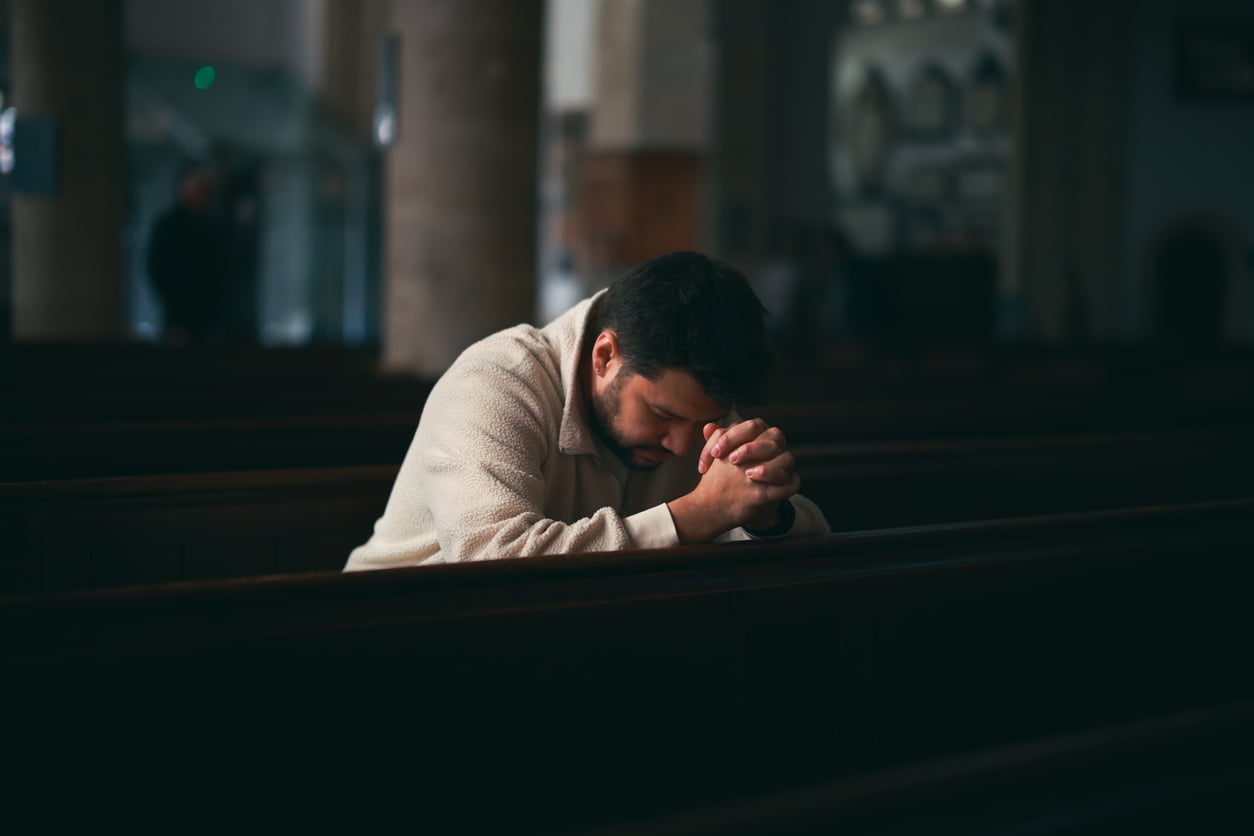
If it has been a long time since your last confession—or if you have never gone at all—the prospect of walking into that small room can feel overwhelming. You might worry about forgetting the words, feeling judged by the priest, or not knowing how to organize your thoughts.
Don’t think of the confessional as a courtroom, but as a hospital. You are not there to be “caught”; you are there to be healed. This Catholic confession guide is designed to take the anxiety out of the process, providing you with a clear, step-by-step script to encounter the mercy of Jesus Christ.
Why Do Catholics Go to Confession?
Before we get to the “how,” it helps to understand the “why.” In the Gospel of John, the Resurrected Jesus breathed on His Apostles and said, “If you forgive the sins of any, they are forgiven” (John 20:23).
Confession (also called the Sacrament of Reconciliation or Penance) restores our relationship with God, cleanses us of mortal sin, and gives us “Sacramental Grace”—a supernatural strength to resist temptation in the future.
Phase 1: Preparation (The Examination of Conscience)
You cannot fix what you haven’t identified. The first step of any Catholic confession guide is a thorough preparation.
1. Ask for Help
Start by finding a quiet place and asking the Holy Spirit to help you remember your sins and feel a genuine sorrow for them. A simple prayer is: “Holy Spirit, help me to see my sins clearly, to be truly sorry for them, and to trust in the mercy of God.”
Need help finding a prayer, check out, 5 Powerful Prayers to Say Before Confession.
2. Use a Guide
Don’t rely on your memory alone. Use the Ten Commandments as a mirror for your soul.
For a deep dive into each commandment and the specific sins associated with them, visit our Detailed Examination of Conscience for Adults.
3. “Kind and Number”
When you identify a grave (mortal) sin, try to remember how many times you committed it (e.g., “I missed Mass four times”). If you don’t know the exact number, an estimate like “about once a month” is perfectly fine.
Phase 2: The Confession Steps (Your Script)
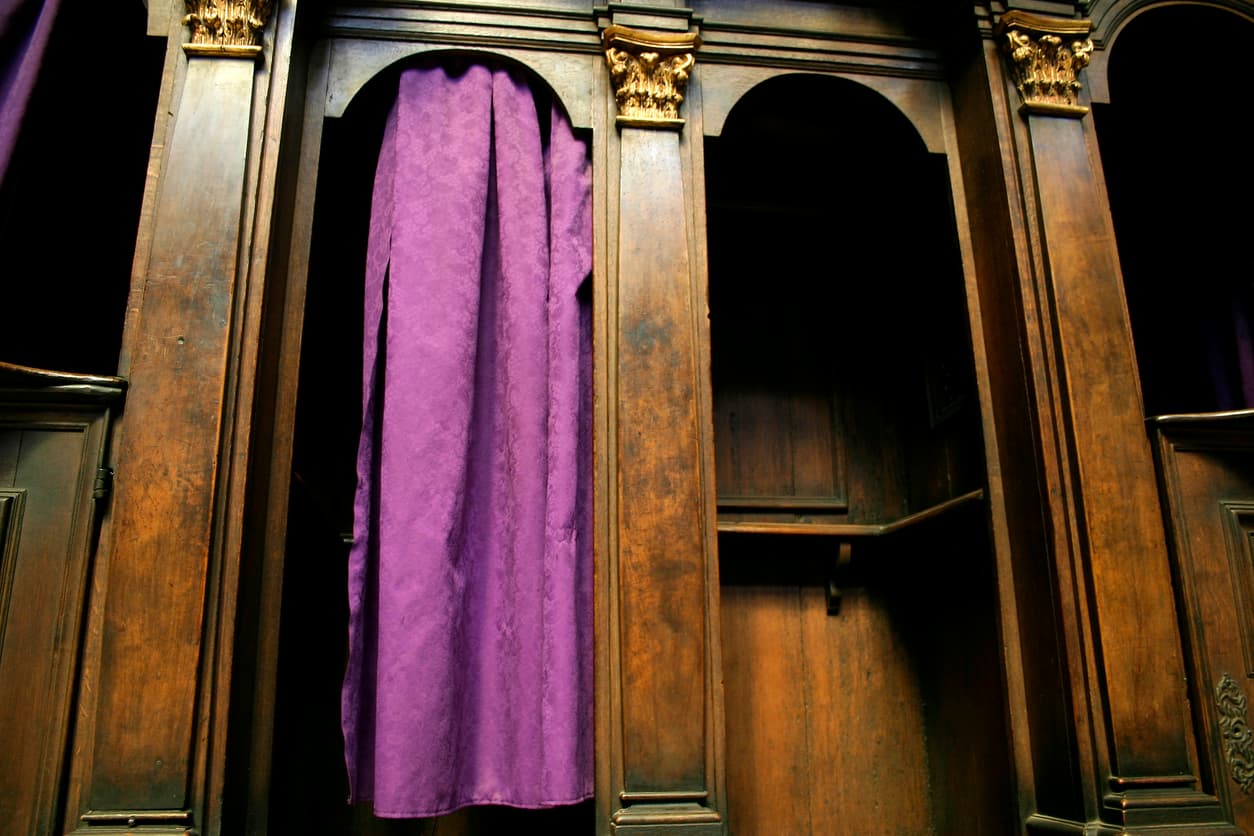
Once you are ready, check the confession times at your local parish (or use MassTimes.org to find one). When you enter the confessional, you usually have the choice to sit face-to-face with the priest or remain anonymous behind a screen.
Step 1: The Greeting
The priest will welcome you. Make the Sign of the Cross and say:
“Bless me, Father, for I have sinned. It has been [mention how long—weeks, months, or years] since my last confession.”
Note: if you don’t remember how long it’s been, just say “It has been a very long time.” The priest will help you.
Step 2: Stating Your Sins
This is the core of what to say in confession. Be clear and honest. You don’t need to tell a long story or provide excuses; just state the sins simply.
“These are my sins…” (List your mortal sins first, then venial sins).
When you are finished, let the priest know by saying:
“For these and all the sins of my past life, I am truly sorry.”
Step 3: Listen to the Priest
The priest may offer some brief spiritual advice (counsel). He is acting in the person of Christ (In Persona Christi). He will then give you a “Penance”—usually a few prayers to say or a small act of kindness to perform—to help you begin your amendment.
Phase 3: The Act of Contrition
After giving you a penance, the priest will ask you to express your sorrow by praying the Act of Contrition. This is a formal prayer where you tell God you are sorry and intend to do better.
The Act of Contrition (Common Version)
O my God, I am heartily sorry for having offended Thee, and I detest all my sins because of thy just punishments, but most of all because they offend Thee, my God, who art all good and deserving of all my love. I firmly resolve with the help of Thy grace to sin no more and to avoid the near occasion of sin. Amen.
Looking for the Traditional versions or a version for children? See our Full Act of Contrition Resource Page.
Phase 4: Absolution and Departure
This is the most important moment of the sacrament. The priest will extend his hand and pray the words of Absolution.
Listen for the words: “…and I absolve you from your sins in the name of the Father, and of the Son, and of the Holy Spirit.” Your Response: Make the Sign of the Cross and say, “Amen.”
The priest will usually conclude with a short dismissal, such as, “The Lord has freed you from your sins. Go in peace.”
Your Response: “Thanks be to God.”
The Seal of Confession: Your Secret is Safe
A common fear people experience is that the priest will tell someone else what they said. This is impossible.
The Seal of Confession is absolute. A priest can never—under any circumstances, including threat of jail or death—reveal what he has heard in the confessional. He cannot even bring it up to you outside of the confessional unless you bring it up first. Your sins are buried in the mercy of God.
FAQ: Common Concerns
What if I forget a mortal sin?
If you genuinely forgot a sin, you are still forgiven! Just mention the forgotten sin at your next confession so it can be brought into the light.
What if I’m too embarrassed to say my sins?
Remember, priests have heard it all. They aren’t there to judge your character; they are there to celebrate your return. In fact, many priests say that hearing confessions are the most humbling and joyful part of their ministry.
Can I bring a list?
Yes! Many people write their sins down on a piece of paper or their phone so they don’t forget. Just be sure to destroy the paper or delete the note afterward.
Is it a sin to stay away from confession?
Catholics are required to confess grave sins at least once a year. However, going once a month is a common and highly recommended practice for spiritual growth.
Conclusion: A New Creation
When you walk out of the confessional, you have been restored. The weight you were carrying is gone. Your soul is in a “state of grace,” and you are ready to receive the Holy Eucharist with a pure heart.
Don’t wait for “the perfect time” to go. The perfect time is the next available hour at your local parish.
Going Deeper
A good confession is not an isolated event — it is one moment in a lifelong journey of conversion. These guides will help you prepare more fruitfully for the Sacrament and grow in holiness between confessions:
- The 7 Deadly Sins: Definition, List, and How to Overcome Them — If you find yourself confessing the same sins again and again, the root is likely one of the seven capital vices. Learn to identify which one is at work in your soul and the specific virtue that conquers it.
- The Catholic Examination of Conscience — The essential preparation for every confession. A thorough, prayerful examination helps you bring your sins to the Sacrament honestly and completely.
- The Ten Commandments: A Catholic Guide — The Commandments are the traditional framework for examining your conscience. This guide walks through each one and what it asks of us in daily life.
- The Ultimate List of Catholic Virtues — Confession forgives sin, but growth in holiness means building virtue in its place. Explore the theological, cardinal, and moral virtues and how to cultivate them.