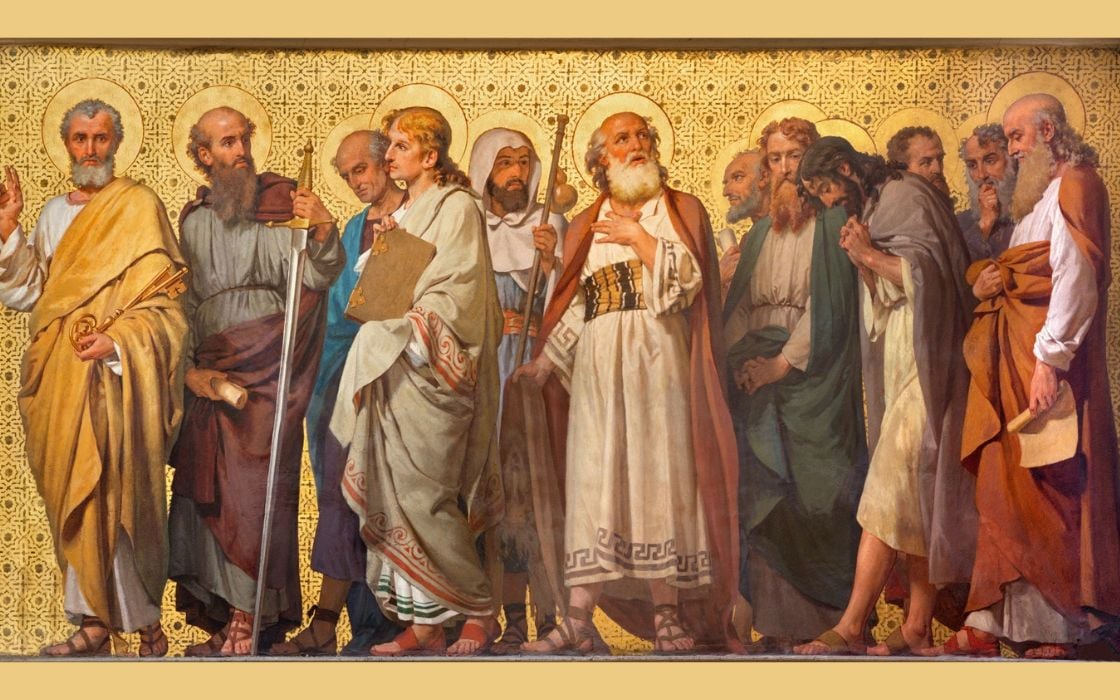
A patron saint is a holy person in heaven who serves as a dedicated intercessor, protector, and model of faith for a particular person, place, occupation, or cause. By inviting them into our daily lives, we strengthen our bond within the Communion of Saints, knowing that we are never walking our earthly pilgrimage alone.
At the heart of Catholic teaching lies the Communion of Saints, the spiritual union of the Church Militant (the faithful on earth), the Church Suffering (those in purgatory), and the Church Triumphant (the angels and saints in heaven).
Because the Saints are in the presence of God, they can intercede for us in a special way. They are our brothers and sisters in Christ who pray with us and for us. When we choose a patron saint, we are selecting a spiritual mentor whose life, virtues, and struggles mirror our own, providing us with a model of holiness to emulate.
To help you find the advocate you are looking for, we have organized a list of common patron saints by their respective areas of patronage.
|
Area of Life |
Patron Saint |
|
Doctors |
St. Luke the Physician |
|
Nurses |
St. Camillus de Lellis |
|
Teachers |
St. John Baptist de La Salle |
|
Students |
St. Thomas Aquinas |
|
Musicians |
St. Cecilia |
|
Artists |
St. Luke the Evangelist |
|
Writers |
St. Francis de Sales |
|
Lawyers |
St. Thomas More |
|
Police Officers |
St. Michael the Archangel |
|
Firefighters |
St. Florian |
|
Soldiers |
St. Ignatius of Loyola |
|
Farmers |
St. Isidore the Farmer |
|
Cooks & Chefs |
St. Lawrence |
|
Carpenters |
St. Joseph |
|
Engineers |
St. Patrick |
|
Job Seekers |
St. Cajetan |
|
Workers |
St. Joseph the Worker |
|
Area of Life |
Patron Saint |
|
Cancer Patients |
St. Peregrine |
|
Breast Cancer |
St. Agatha |
|
The Sick |
St. John of God |
|
Eye Ailments |
St. Lucy |
|
Throat Ailments |
St. Blaise |
|
Headache Sufferers |
St. Teresa of Ávila |
|
Expectant Mothers |
St. Gerard Majella |
|
Those with |
Our Lady of Lourdes |
|
A Happy Death |
St. Joseph |
|
Area of Life |
Patron Saint |
|
Mothers |
St. Monica |
|
Fathers |
St. Joseph |
|
Married Couples |
Sts. Louis & Zélie Martin |
|
Young People |
St. Aloysius Gonzaga |
|
Children |
St. Nicholas of Myra |
|
Grandparents |
Sts. Joachim & Anne |
|
Widows |
St. Elizabeth Ann Seton |
|
Priests |
St. John Vianney |
|
Converts |
St. Augustine of Hippo |
|
Area of Life |
Patron Saint |
|
Anxiety & |
St. Dymphna |
|
Lost Things |
St. Anthony of Padua |
|
ImpossibleRequests |
St. Rita of Cascia |
|
Grief & |
Our Lady of Sorrows |
|
Addiction |
St. Maximilian Kolbe |
|
Prisoners |
St. Dismas |
|
Poverty & |
St. Vincent de Paul |
|
Area of Life |
Patron Saint |
|
Travelers |
St. Christopher |
|
Sailors |
St. Brendan the Navigator |
|
Motorists |
St. Frances of Rome |
|
Animals & Ecology |
St. Francis of Assisi |
|
Gardeners |
St. Fiacre |
|
Against Storms |
St. Scholastica |
Note: If you do not see your specific situation listed, remember that you may ask any canonized saint for their intercession. The entire Communion of Saints is available to pray for your needs.
The practice of seeking the intercession of the saints is not a modern innovation; it is an ancient tradition dating back to the early Church. Its origins trace back to the earliest centuries of Christianity, when the faithful gathered at the tombs of martyrs to celebrate the Mass.
In the early Church, the burial sites of martyrs—those who gave their lives for Christ during periods of Roman persecution—became places of prayer. Christians believed that because these individuals had been united with Christ in His death, they were uniquely powerful intercessors in His presence in heaven. By building altars over these graves, the early Church established a physical and spiritual connection between the "Church Militant" on earth and the "Church Triumphant" in heaven. This laid the foundation for the understanding that holy men and women could "patronize" or protect the community of the faithful.
As the Church expanded across Europe, the concept of patronage developed to touch every aspect of daily life. During the Middle Ages, the rise of guilds—associations of craftsmen, merchants, and artisans—led to a surge in specialized patronage. Members of a guild, such as blacksmiths or bakers, would adopt a saint whose life story reflected their specific trade.
For instance, St. Luke the Physician became the patron of medical guilds due to his background as a doctor, while St. Cecilia became the patron of musicians because of her legendary love for singing hymns to God. This helped the faithful sanctify their daily work, transforming labor into an act of devotion by aligning their professional lives with the example of a saint.
It is important to understand the Church’s distinction between Latria and Dulia. Catholics reserve Latria (adoration) for God alone—the Father, the Son, and the Holy Spirit. Dulia (veneration) is the honor and respect we show to the saints. When we seek the patronage of a saint, we are not worshiping them as gods; we are recognizing the work of God’s grace in their lives and asking them to present our needs to the Lord, just as we might ask a friend on earth to pray for us.
The devotion to patron saints extends beyond seeking intercession in times of need. At its deepest level, the Church offers us the lives of the saints as human templates for holiness. While Christ remains our ultimate model, the saints—men and women who lived in the same fallen world we inhabit—demonstrate how the grace of God can transform human weakness into heroic virtue.
When we choose a patron saint, we are selecting a spiritual mentor whose path to sanctity serves as a blueprint for our own.
Just as a student studies a master to learn a craft, the faithful study the saints to learn the art of living according to the Gospel.
To understand how a saint can guide your own spiritual growth, consider the example of St. Monica:
St. Monica: The Power of Persistent Prayer
By aligning ourselves with holy models, we find the courage to cultivate the same virtues that defined their earthly journeys.
You do not need to wait for a special occasion to choose a patron saint. Here are a few ways to find yours:
The practice of honoring saints as intercessors is a distinctive part of Catholic, Orthodox, and some Anglican traditions, rooted in the doctrine of the Communion of Saints.
Yes. You can have many spiritual friends in heaven. Many Catholics have one primary patron, but they also turn to different saints for specific needs throughout their lives.
You never "lose" the relationship with a saint once you have begun a devotion to them. However, as you grow and face different stages of life, you may feel called to develop a closer devotion to a new saint who can help you navigate new challenges.
No. While many early patrons were martyrs (those who died for the faith), the Church also recognizes confessors (those who lived holy, virtuous lives) and other holy people as patrons.
No Subscriptions, NoPaywall, 100% Free!
Experience the richness of our Catholic Faith with the free Covenant Network app, now available on your iPhone or Android.


No Subscriptions, NoPaywall, 100% Free!
Experience the richness of our Catholic Faith with the free Covenant Network app, now available on your iPhone or Android.


An initiative of Covenant Network
A new app for daily prayer and the interior life, coming to iOS.